Slaying Giants

giant-slayer

On Christmas eve several years ago, Marianne and I spent time with about thirty brothers in the jail. During our time of fellowship, one of the men read the poem below.

Here’s the story behind the poem, then the poem …

Earlier that December, I shared with those men how our journey in the Lord is like Israel’s journey from slavery in Egypt, through the desert, and then into the promised land.

God takes us out of the bondage of Egypt, but then uses the wilderness to burn Egypt out of us.

In the wilderness, God prepares us to take possession of the promised land – that place where we are able to own and responsibly manage the things He has created us to both be and do.

Continue reading

Myopic Ekklesia

In Romans 12, Paul lists what Biblical scholars often call the seven “motivational gifts.”

Promoting Our Own Core Motivations

I like that description. After years of pastoral counseling with hundreds of people, I’ve come to deeply respect how God creates each of us with different core motivations. Furthermore, among Christians, those seven core motivational gifts often correspond to God’s unique calling for each believer.

When we tend to elevate our own gift, motivation and calling above all others, however, and think the Church and God’s people need to do the same, our “gift” becomes oppressive.

Continue reading

Organic Church Worship

Lately, I’ve been contemplating what worship is, and looks like, when God’s people authentically gather together as His “ekklesia”.

In the Bible, “ekklesia” is the Greek word often translated “church”. But it means far more than what most “churches” have become.

For Christians, the New Testament concept of ekklesia involves God’s people actively forming community, including meeting together. As a community, and in our gatherings, we then participate – each and every one – in expressing the life of Christ in us, among us, and through us. These days, that ideal is often called “organic” church.

Continue reading

Generations

Life reproduces life. That’s true in nature and it’s true spiritually. Where there is vibrant mature life, there is reproduction.

Life Reproduces Life!

Last week, we saw that truth confirmed yet again as a third-generation fellowship emerged among what some consider a “disreputable” segment of our county.

This new community of believers is in a subculture where Christians and other churches previously lacked the courage to go. Until now, they had been written off as beyond hope.

These new believers found life in Jesus because some cared enough to go where most feared to tread.

Continue reading

Balance

The greatest challenge facing the Church today are those who promote truth out of balance:

  • Those who think the Person of Christ can be fractured from His concurrent propositional truths, moral precepts and commands;
     
  • Those who want the vibrancy of the internal Living Word, without submitting all things to the authority and discipline of His written external Word;
     
  • Continue reading

Organic Church Dead Ends

I’ve been thinking a lot about why significant segments of the organic church community in the Western hemisphere have failed to achieve Biblical viability – becoming instead anemic, self-focused and insular.

Even a casual observer must acknowledge that “organic” or “simple” churches in the West (unlike other parts of the world) seldom exhibit dynamic spiritual power; consistent reproduction, growth and maturity; or tangible, transforming impact.

Continue reading

My Smart-Aleck Response

Ministry One to Another?

On Facebook, I posted a comment supporting a recent blog by Neil Cole about why the “organic church movement” is important. One of my smart-aleck Facebook friends responded:

Organic Church Movement? Is that a movement naturally fertilized? Or maybe movement marching only to organ music. Could also be a church movement of Kidneys, Livers and Colons?

So I thought I’d be a smart aleck in responding:

Continue reading

Finding Ekklesia

Several weeks ago, I was asked how to find “ekklesia” (the Greek word in the New Testament often translated as “church”).

Many today are frustrated because they can’t seem to find authentic fellowship, or feel stuck in the “wilderness” after leaving the institutional church.

As I’ve thought about this, it’s been hard for me to know how to respond. The last thing anyone needs is another “program,” “method” or “three easy steps” to find something that God designed to be authentically birthed, and sustained, organically.

You see, God intends that life reproduces life. That principle is built into the very fabric of creation. Like all things that impart life, real ekklesia is organic, through and through.

And by “organic”, I mean simply this: The authentic and diverse life of Christ in me, which is then expressed among us and through us as we become the wonderful, dynamic, multi-gifted and participatory Body of Christ.

The key to finding this, I think, is found in those two words: authentic and diverse.

So here’s my response on how to find ekklesia, rooted in my own experience of finding, and then helping others find, real life and real fellowship – not as one who’s arrived, but simply as one who has been on the path maybe a little longer.

Continue reading

Glorious, Messy Reality

Danger, Danger, Danger: Are you someone who is adamant about Jesus and fellowship needing to reflect your own theories and sensibilities, yet are not yourself in functional ekklesia (the Greek word used in the New Testament for “church”)?

The wonderful, multifaceted Body of Christ

By ekklesia, I’m not talking about your traditional Sunday-go-to-meeting “church” with it’s hour of worship-band sing along, directed prayer and monologue sermon. Nor am I talking about posting on Facebook.

Rather, I mean authentic, flesh-and-blood community which finds expression as the multifaceted, multi-gifted Body of Christ – including dynamic, diverse and participatory fellowship gatherings.

Because I am very, very careful not to spout off pet theories divorced from reality, I try to keep my blog rooted in such fellowship. There’s enough naive, aspirational gibberish in the blogsphere these days, and practical reality seems to be sorely lacking.

Continue reading

Becoming The Body of Christ

Sure, institutional churches have great programs, services and staff, and lives are touched. But have they produced a mature Body of Christ?

Isn’t this the nub of the matter?

Folks can rationalize all they want and try to read their human traditions back into the Bible, but after it is all said and done, has the institutional church succeeded in seeing a mature Body of Christ emerge?

Continue reading

Directed versus Participatory Church: A Dialog

A friend of my mom who is a very dear, older sister in the Lord:

“How are you doing, Jim?”

Me:

“Good. I just got back from being in the jail this morning. I was with about fifty men from one of the housing units.” (She knows I often “minister” in the jail.)

Her:

“Oh, did you teach?” (Years ago, I had a very successful traditional teaching ministry in one of the larger churches in the county, and she was always one of my most eager and engaged students.)

Me:

“No. These days, I mainly let them teach and minister to each other. Sometimes I may say something, but not always and I keep it really short so they can take the lead among themselves.

So NOT church!

“Today various men shared verses, testimonies, songs, teachings and we even had some great, improvised Christian rap by two of the brothers.

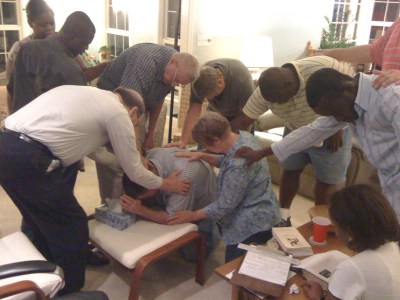
“One man shared, with tears of joy, about how the Lord had given him peace over the uncertainty of his upcoming trial, and I asked if he would pray for other men facing the same anxiety. He did a beautiful job as a half dozen men gathering around him in a circle, arms round each other’s shoulders, and he imparted to those struggling with the same issue some of the grace God had given him. He had never done that kind of thing before. I didn’t pray for them, but stayed in my seat, because that other brother who was an inmate had the grace needed and I didn’t.

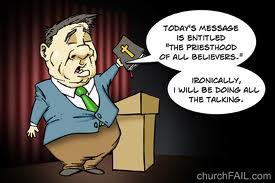
“That’s how it works. We’ve gotten away from directed meetings where a worship team ‘does’ worship for everyone and a pastor ‘does’ a monologue teaching and everyone passively sits there – other than following along with the music and maybe an ‘amen’ or two. We just don’t see how that matches up with what the New Testament says about being the church: the multi-member Body of Christ where every part contributes.

“Instead, I have learned to sit back so they can learn to express what the Lord is doing in them and it always seems to meet the needs of those present. Sometimes I have something to share, usually along the lines of helping to create a framework for them to come forth. This morning, however, like most of the times I join with them, I said a few words as just one of the guys then sat down as they ministered to each other for an hour and half. Like usual, they also ministered to me.”

Her:

Silence, then, “Oh, so you are there to make sure they don’t get off track?”

Me:

“No, they’ve learned to do a really good job of that themselves. I just go to enjoy their fellowship every now and then and be an encouragement to them or maybe add some foundational input.”

Her:

Silence, then “Oh. ”

More silence, then, “So they get together every week or so when you go in?”

Me:

“No, actually, they are their own church. They meet as smaller churches every day after their evening meal. I may see them only every week or two, but they do fine on their own and don’t much need me. We encourage them to be the church, rather than trying to ‘do’ church for them or importing church. That way, they learn to minister to each other and grow up in the Lord.”

Her:

A very, very long silence, then finally, “Nice weather we’re having, huh Jim?”

Me:

Sigh. It’s just about impossible for people to break out of their traditional concept of “church” and to get their mind – and spirit – around the New Testament idea of participatory fellowship rather than directed meetings.

Some day, some day. In the meantime, I just continue to sow seeds as the Lord directs …

~ Jim Wright

“Us” and “Them”

Exactly. This video captures my passion and expresses my life.

Jesus is not about “us” ministering to “them”, or “us” creating cocoons of shared sensibilities as though we are “Beyond” everyone else.

God help us – institutional and organic churches alike.

Hear me on this: God may not call all of us individually to this or to that, but He does call all His people to a big “us” – also known as His Church, the multifaceted Body of Christ.

And in His Church there is no “them” when it comes to His life being expressed in us, among us and through us.

Continue reading

The Transformational Power of the Cross

Yesterday was the 123rd anniversary of Hitler’s birth. The fact that we do not celebrate his birth or the evil he did is a testimony to those who gave their lives to stop him.

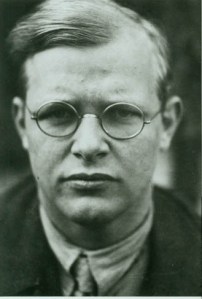
Dietrich Bonhoeffer

One such man was Dietrich Bonhoeffer, a brilliant theologian and humble pastor who wrote two of the great Christian classics of the twentieth century, The Cost of Discipleship and Life Together.

For Bonhoeffer, his faith was not just a private matter or limited only to the church. As he saw firsthand the horrors of Nazi Germany, he resolved to stop them and became involved in a plot to overthrow the government. The plot failed and Bonhoeffer was arrested. He eventually was martyred by Hitler, who imprisoned him in a German concentration camp and then hanged him.

Continue reading

Holy Ghost Church in the County Jail

I spent Sunday afternoon with the guys in one of the churches that we planted three years ago in the local jail.

My voice went hoarse from singing along with them and my fingers became sore from playing the guitar as they took the initiative in starting song after song and leading forth.

For nearly an hour and a half they sang non-stop praises to the Lord, and were so loud and enthusiastic I’m sure they could be heard throughout the building.

They were stompin’, clappin’ and rockin’, with lots of laughin’ and cryin’ in gratitude before the Lord!

Now, I don’t want to shake up anyone’s theology, but the Holy Spirit also was grooving to some powerful, spontaneous rappin’ that was going on!

Continue reading

Outside the Box

For most Christians, “church” is the big box where they attend a “service” on Sunday mornings.

If they are super-committed Christians, maybe it means attending additional meetings and programs that emanate from the Box during the rest of the week.

Outside the Box!

It took me years to learn to think – and act – outside that box!

Yes, Christ can be found in the box. But He does His best work, I’ve found, apart from and outside the box.

My spiritual heritage was outside the box. I was birthed into the Kingdom of God during the Jesus Movement and was very active in what we’d now call a network of “organic” or “simple” fellowships. But as the decades passed, I allowed myself to be slowly but surely drawn into the box.

Getting back out required a fundamental paradigm shift as I honestly and painfully let Scripture strip away my man-made traditions and accumulated expectations.

Continue reading

Modern Day Pauls?

masks

Many tout themselves as apostles and modern-day church planters like Paul, but where’s their Antioch?

Although Paul functioned as an apostolic church planter, his self-expressed credentials included the fact that he continued as an elder – meaning he remained grounded in and part of the local leadership of his home church in Antioch.

All too often we ignore the fact that Paul went on his apostolic missions only after being commissioned and sent by his local church, and that happened only after he’d proven himself over many years in the context of a local, functioning fellowship.

At the end of his various journeys to help start and encourage other churches (except for his last, where history says he was beheaded in Rome), he would then return for a season to his home church in Antioch before being sent out again.

In contrast to Paul, be wary of gifted but itinerant men and women who want to “help” you form or succeed as a local church – through their books, blogs, podcasts, seminars and requests to visit you – yet lack ongoing community with, roots in, commission from, and accountability to another functioning local church.

Some of us have been around long enough to see past incarnations of such floating, unattached “ministries” to local churches.

In the 70’s and 80’s, they proliferated within the Charismatic movement – mainly among those who were certainly gifted but nonetheless could never succeed at finding healthy church with accountable community in their own lives.

Often, they were authors or good aspirational communicators who had exciting ideas, but only answered to themselves.

Sometimes, however, they’d form loose associations where they purportedly answered to each other in lieu of having any Antiochs in their lives – which only tended to reinforce the shared theological and personal idiosyncrasies which attracted them to each other in the first place.

More recently, we saw it in the “organic church” movement, as itinerant “workers” (their euphemism for “apostles”) wreaked havoc on countless house churches. Almost none of those assemblies survived.

Without exception, over time problems emerged with each and every of those so-called apostles and “church planters” – and with the churches that listened to them. (And I mean that – I can’t think of a single one who did not fall prey to one disqualifying problem or another, often related to pride or just becoming increasingly weird!)

There’s too much of this stuff starting to emerge again today, especially among those wanting to be the church one with another. 

Those who promote themselves, their services, and their agendas without living it and having made it first work – with accountable and sustainable results – in their own lives and hometowns are fraught with danger.

Ignore their lack of grounding in an actual, functional church like they promote to others, and you too will reap disaster.

~ Jim Wright

Beyond Evangelical? – A Follow Up

Two days after I posted my series “Beyond Evangelical?“, Milt Rodriguez  – who I took to task in my series – wrote a blog which helps close the gap, so to speak, that I was addressing.

I urge everyone to read Milt’s new blog. It really is very good, and is at http://miltrodriguez.wordpress.com/2012/02/24/10-myths-about-organic-church-part-9/.

But the gap still exists so long as he continues to have a very limited view of the “objective” aspect of his “holistic approach” (as he discusses in his blog).

Specifically, does he still discredit, as he’s done in other blogs, those who (to quote him directly) engage in “praying and working toward … bringing this nation back to God” because political and civic engagement “is just another distraction from the person of Christ Himself” (emphasis added)?

Helping the poor and needy – as Milt’s blog urges – is not just doing charity and personal ministry (it certainly can include that, and I’m active in those areas), but also can legitimately include dealing with systemic social and political issues. It also can include those who labor in economics, law, politics, media, the arts, education, and all other spheres of life – not as “distractions” from Jesus but as expressions of the love of Jesus which is alive in them.

I have no idea if God has called Milt to those larger arenas, but my plea is that he expand his vision to embrace those who are called – and rethink some of his very harsh prior rhetoric against other brothers and sisters whose holistic approach may be broader than his own.

As a fellow church planter, I think it is best that we avoid imposing our own gifts, callings and sensibilities (including our political likes and dislikes and maybe our natural tendency to discount those things that we don’t necessarily personally grasp) on God’s people as somehow normative. That is so limiting to those who have God-given abilities and motivations which may exceed or differ from our own.

As I state in my Beyond Evangelical? series, and it bears repeating: Jesus is subjective, personal and relational. But He is also objective, cultural and propositional. And true fellowship – organic, missional, or whatever – must permit folks to express all of Jesus, no matter what our gifts, our callings, or our sensibilities.

Again, though, I think Milt Rodriguez’s latest blog is excellent and I applaud him for it.

Jesus at the Fringes

It’s amazing how ekklesia takes root in the fringes of society when you empower Christ in existing community rather than trying to bring “church” to them, take them to “church” or do “church” for them.

Why Do We Make It So Complicated?

When some of us started changing our perspective, we started seeing dynamic, participatory, indigenous fellowships emerge in the jail, among the homeless, and with ex-offenders – as well as other improbable existing communities.

The life of Jesus that is evident in those fellowships at the fringes of society is now attracting “normies” to come and be part of their times together. It is amazing to see the spread of the Gospel through those whom society scorns, for the redemption of society.

When you introduce people to the freedom to find and express Christ in them and through them – and thus allow them to relate together as a fully functioning and participatory Body of Christ – Jesus just naturally happens!

Continue reading

A Multilingual Jesus

A Multilingual Jesus

God speaks to some subjectively, and to others objectively, and each often forgets that Jesus is multilingual. Regardless, His subjective love is rooted in objective truth, and He never limits Himself to just one or the other.

When we become so focused on one, to the exclusion of the other, we are not really relating to a complete Jesus. Rather, we often are seeking self affirmation – a Jesus who simply relates to us on our own terms and within the confines of our own comfort zones.

We need each other in the context of the whole Body of Christ if we truly want Jesus as our wonderful and multifaceted Lord and savior – who then transcends our individual limitations.

As I work with fellowships and minister to individuals, I see that an overly subjective perspective (or, if you prefer, “heart” and feelings) eventually becomes mired in unhealthy sentimentality.

Those, however, who are overly objective (“mind” and logic) eventually become mired in a dry impersonality.

When we together find both the subjective and the objective Jesus, however, we find mature health.

Different Spiritual Languages

Each of us will naturally tend to speak in our own God-given spiritual language of the heart or of the mind, and that’s as it should be. But we nonetheless need each other.

In my own life, God has given me a wonderful wife who relates to God very subjectively. He speaks to her through feelings, while I, on the other hand, hear God very logically and rationally.

When we started dating, we almost didn’t make it because I thought my spiritual language was superior to her’s. I kept insisting that she communicate with me about the Lord in my own language.

She, in turn, couldn’t understand that relating to Jesus through my logic and reason, and my need to figure things out, was just as intensely personal and intimate as her way – even though it was very different.

Where she primarily felt the subjective heart of Jesus, I primarily pursued the objective wonder of Jesus – with very different spiritual languages that matched our different natures.

Several months after we started dating, she broke up with me – through my own fault – because of those differences. But the Lord used our time apart to teach us to honor and value our differences, and to start learning to become bilingual.

For me, it was gut wrenching – literally and figuratively! When the Lord finally allowed me to “figure” out what I had done – by not accepting the validity of how God spoke to her and related to her and thinking my way was superior – I was deeply humbled and I asked her to forgive me. Fortunately, she did!

For the subjective “feelers” among us, though, don’t start cheering because your side won! Trust me, I’ve seen too many instances where insisting that everything is about subjective, relational feelings is just as tyrannical and abusive (often in a seemingly sweet but passive-aggressive way) as insisting that Jesus is only about objective truth. Health and maturity in Christ comes through us learning to hear from, and value, each other.

God speaks things that you need to hear, but won’t hear, except through those who’s spiritual language resonates with His objective nature. Likewise, you will hear things that I won’t hear unless I affirm your subjectivity. And when my objectivity finds unity with your subjectivity, we experience Jesus more fully.

Now that we are married, my wife and I laugh over our very different ways of hearing from, and speaking to, the Lord. But we both know, at the core of our beings, that the other’s spiritual language is just as valid and profound as our own. And when Jesus speaks to my wife via subjective feelings, I listen! Likewise, she listens when Jesus speaks to my logic and reason.

You see, the Lord primarily relates to her in a beautiful language of subjective love and feeling. With me, it is through the wonder of objectively understanding Him and His creation.

Yes, I can be subjective and passionate, but the fact remains that Jesus gave me a very different spiritual language than my wife. And yes, she has logic and reason, but that’s not her primary spiritual language. Yet those differences are fascinating, and we complete each other!

Healthy Communities

Like in a marriage, a healthy community of believers must learn to understand and value each other’s different spiritual languages. Only as we develop the ability to truly hear and appreciate one another, and not be threatened or express impatience towards what often seems so “other” and foreign, will we experience all of Jesus – through each other!

Too often, I fear, we turn “church” into isolated enclaves of sameness, where we retreat into our mutually-affirming comfort zones by seeking to related only to those who speak our own spiritual language.

Only as we affirm the different multilingual voices of God in each of us, is He wholly expressed among all of us.

I thank God that I found this in my marriage, and in a fellowship of diverse brothers and sisters who value the fact that Jesus is multilingual.