Resurrection Sunday

Forty-eight years young in the Lord!

On Resurrection Sunday in 1965, when only eight years old, I had a deep, deep conversion experience as I totally surrendered to the Lord.

It was in an old-line Pentecostal church that met in the pastor’s home.

I’m told that my tears of repentance on that worn wooden floor made permanent stains.

grace

Wow, how time has passed.

My years of service to Jesus have been – and continue to be – a wonderful adventure. Even during some tough times, I never once regretted belonging to Christ – my King and my Redeemer.

Through it all, I’ve always felt His hand on my life. He blessed me with a solid foundation from Godly parents and mature teachers, which has served me well over the years.

In an age of cheap grace, crazy doctrines, postmodern spiritual angst and “deconstruction,” that foundation yet stands firm.

For those willing to surrender their sensibilities to the Living Word, in submission to His written Word, He offers the same assurance.

Really, it’s just not that complicated.

But it does mean letting go of your own foolishness and impulse to define Jesus – and what ultimately is right, real and true – on your own terms.

My life is a living testimony to His sovereign Lordship, and His passion is my very life.

I invite you to also surrender …

And find life.

~ Jim Wright

Related article

The Fractured Logos

Fracturing The Logos of the Gospel:

This is another timely and important blog by Miguel Labrador.

As he points out, the “Christ is All” crowd has a fractured view of Jesus and scripture.

As I’ve discussed in my own blogs, those who follow existential authors like Frank Viola and his fellow itinerant “workers” like Milt Rodriguez, Jamal Jivanjee and Jon Zens, often create a Jesus in their own image based on their own sensibilities.

They then elevate their very postmodern Jesus over His own written word of scripture, under the mantra that “Christ is All” – such that Christ (or at least their perception of Him) trumps scripture.

As a result, they sever the Living Word from His written Word.

When called out, they make feeble assurances that they have a “high view” of scripture and think it is “inspired”, while nonetheless rejecting its plenary authority.

In fact, they follow the existential “theology” of Karl Barth, which elevates our own perceptions of Christ as higher revelation than God’s own chosen revelation of scripture. The result has been a pattern of anemic churches, introspective faith, weird doctrines and practices, manipulative and at times exploitive “leadership”, and self-referential “truth”.

In essence, they eat from the Tree of the Knowledge of Good and Evil – by choosing their own subjective perceptions of Christ and His Church over His sovereign authority to objectively define what, in fact, is true, real and right.

Fortunately, more and more are looking behind the curtain and seeing what’s what.

I look forward to Miguel’s new series on keeping the Messenger integrated with His message – and us in sync with both!

Beyond Scripture? (Part 3)

The low view of God in the Old Testament, found among those touting a so-called “Christocentric hermeneutic”, comes from too high a view of themselves.

The Tree of the Knowledge of Good and Evil

They often take personal offense at how God dealt with humanity in the Old Testament – including His sometimes fierce display of holiness and punishment of sin and rebellion.

So they make God in the Old Testament an aberration. They substitute their own perceptions of Christ – rooted in their post-modern sensibilities – for the totality of Scripture, and make their resulting “Christology” higher revelation than God’s own external Word of Scripture.

They have joined Adam and Eve in choosing the moral autonomy of deciding for themselves what is right and wrong, and have the further hubris of then imposing it on God Himself.

Continue reading

Some Good Reads…

Two recent blogs I liked are:

Giving in Simple Church, by Tim Day.

Like Tim, Marianne and I reject the idea that Christians are obligated to tithe or that the tithe carries over into the New Covenant. But like Tim, we still give at least 10% of our income because we feel that’s what God wants of us personally, as we help and serve others.

Tim’s blog provides some very balanced, practical insight on giving.

The Changing Face of Full-Time Ministry, by Alan Knox.

We need to move past the old mentality of “full-time ministry” and realize that we all are ministering Christ full time.

Both of these brothers, and their blogs, should be on your “must read” list.

~ Jim

Subscribe

Words

Words have the power to not only define, but to create reality – for good or for bad. Too often, we forget the power of words: not only ours, but of God Himself.

power-of-wordsI don’t think it was a coincidence that God spoke the universe into existence, chose to reveal Himself through His spoken Word of scripture, or came to dwell among us as the Word made flesh.

I also don’t think it is a coincidence that God still speaks to us today, or that He has empowered us to speak authoritatively on His behalf.

Continue reading

Theology and Reality

Miguel Labrador has posted another thought provoking blog, entitled Theology Precedes Practice, Vice Versa, or Something Else?

Keeping Theology and Reality in Balance

In it, he states: “orthodoxy (theology) & orthopraxy (practice) are ‘simultaneous.’” I think he’s right, in the sense that we must seek to keep both in balance – our walk must match our talk, and our talk must match our walk.

Sometimes, however, the Lord allows one or the other – our doctrine or our practice – to be challenged in ways that force us to then adjust the other.

Regardless, it is important to keep them in sync, as much as possible, and not let one get too far ahead of the other.

Continue reading

The Cultural Implications of the Great Commission

The Cultural Implications of the Great Commission

Rob Moley, in his blog Restore the Word, wrote yesterday on “The Great Commission: Discipling Individuals or Nations?”.

In it, he says this about the Great Commission:

Rather than being a command to influence nations with the principles and truths of God’s kingdom, the logic of the command in Matt. 28:19-20 is to make disciples from every nation. Then, as ambassadors of God’s kingdom, these disciples are able to influence all aspects of society, and God willing, even disciple whole nations.

His point is that the Great Commission is about transforming individuals into disciples who obey all that Christ commands, who in turn transform the world around them.

Continue reading

Postmodern Idolatry

Does God do what is right, or is it right because God does it?

Many think God is subservient or subject to external standards – that He does what is right because there is a higher moral code that even He obeys.

This denies God’s sovereignty, and as a result many today seek to hold Him to the standard of their own sense of right and wrong.

Continue reading

A Doobie Brothers’ Gospel

Jesus died on the cross because He accepted me, wholly and completely, just as I am…

By His Grace, He Bids Us Come and Die

So I could die to myself in order to accept Him, wholly and completely, just as He is.

This the true Gospel: Accepting me as I am cost Jesus His life, and accepting Him as He is costs me my life in return.

The mystery of the cross is that we die with Him to find new life in Him – but only on His terms.

Yet if you look at social media sites like Facebook, it seems that many Christians only know a Doobie Brothers’ Gospel.

Continue reading

Generations

Life reproduces life. That’s true in nature and it’s true spiritually. Where there is vibrant mature life, there is reproduction.

Life Reproduces Life!

Last week, we saw that truth confirmed yet again as a third-generation fellowship emerged among what some consider a “disreputable” segment of our county.

This new community of believers is in a subculture where Christians and other churches previously lacked the courage to go. Until now, they had been written off as beyond hope.

These new believers found life in Jesus because some cared enough to go where most feared to tread.

Continue reading

Balance

The greatest challenge facing the Church today are those who promote truth out of balance:

  • Those who think the Person of Christ can be fractured from His concurrent propositional truths, moral precepts and commands;
     
  • Those who want the vibrancy of the internal Living Word, without submitting all things to the authority and discipline of His written external Word;
     
  • Continue reading

Organic Church Dead Ends

I’ve been thinking a lot about why significant segments of the organic church community in the Western hemisphere have failed to achieve Biblical viability – becoming instead anemic, self-focused and insular.

Even a casual observer must acknowledge that “organic” or “simple” churches in the West (unlike other parts of the world) seldom exhibit dynamic spiritual power; consistent reproduction, growth and maturity; or tangible, transforming impact.

Continue reading

Ekklesia: A Modest Manifesto

Ekklesia: A Modest Manifesto

Wherever he went, the Apostle Paul always sparked either revival or riot.

Does our age, and our culture, deserve any less?

Let’s boldly smash our boxes of insular spirituality and cultural lethargy by confidently proclaiming that Jesus is Lord of all.

Let’s reject narcissist Christianity by allowing Jesus in me to be more than about me – and my sensibilities.

Let’s stop foisting our own grace, gifts, callings and motivations on God’s people as normative for all.

Let’s embrace the diversity of His grace, gifts, callings and motivations in the context of true ekklesia – local authentic community where Jesus in us is expressed through us as His multifaceted and participatory Body.

Let’s stop saying everything is about my relationship with Jesus while discounting his Kingship – including His commands and His precepts.

Let’s stop saying I only do what I hear Jesus subjectively tell me, while denying the power and authority of what He also says in His written Word.

Let’s stop proclaiming “Christ is all” while minimizing all that Christ has given for knowing more of Him – including not only His presence in us, but also the plenary authority of Scripture to guide us in sound doctrine, balanced community that affirms objective standards, holy lives that please Him, engaging our culture, and wise counsel from mature believers who model His precepts.

Let’s reject gnostic tendencies that seek to separate the spiritual and the material world of our everyday existence by denying the authority and relevance of Christ – and His body – regarding all of creation.

Let’s stop discounting those who went before us, and their creeds and experiences, by humbly learning what they have to teach us despite the reality that we all have flaws.

Let’s affirm God’s continual sovereign advance through history and reject the spirit of our age and its myopic, isolationist pessimism.

Let’s be discerning about self-proclaimed apostles, prophets, evangelists, teachers or other itinerant ministries – and their writings – when they are not themselves presently rooted in, accountable to, coming from, or even able to demonstrate a history of integration into actual, functional, local ekklesia.

Let’s reject the voices of those who try to separate the centrality of Christ from the Great Commission, mission and discipleship.

Let’s unleash God’s people to be fruitful at all stages of their growth, as Christ enables, and stop burdening them with the bondage of our preconceived preconditions of “root before fruit”.

Let’s start embracing balance and maturity – as together we become His disciples through functional, participatory ekklesia that reflects the life of Christ but is also rooted in the authority of His written Word.

Let’s be mighty men and women of God, who once again spark revival or riot as we proclaim the fulness of Christ as merciful Savior, gracious Lord, sovereign King and ultimate Judge to a desperate world.

As such, may we be life-transforming, culture-changing ekklesia once again – the visible Body of Christ which doesn’t merely say come, but goes forth into all the world.


I wrote and posted this on the morning of my birthday, when I officially became a “senior citizen”. It summarizes a lifetime of experience serving the King of Kings. May it be both a present and a challenge to my passion: the wonderful, multifaceted, participatory Body of Christ.

Fathers and Teachers

Fathers and Teachers

I keep hearing from folks who have felt troubled and marginalized by authors and bloggers who seem unable to go beyond their own sensibilities and who seek to make their own gifts and limitations normative for the entire Body of Christ.

In response, I can’t shake this urge to proclaim what I see in scripture and experience daily in our own fellowships: The multifaceted, multi-gifted, multi-called Body of Christ.

I am convinced that God’s heart is passionate about releasing His people to be all that He created them to be – not just in our churches, but in all spheres of life.

Our collective failure to do this – both within the institutional and organic church communities – and the insular, anemic fruit that has resulted, is one of the biggest challenges facing the West today.

Individual Limitations

Here’s the problem I see daily among individual Christians:

Those who are primarily motivated by the heart, feel all must be the same. Those primarily motivated by renewed minds, think all must be the same. Those primarily motivated by transformed wills, act as though all must be the same…

We are post-modern in our sensibilities, so all must be the same. We are called to this, or to that, and so all must be the same. We not are called to this, or to that, and so all must be the same…

Please, everyone, can’t we just stop this nonsense!

Yes, Christ is all. But is He just Lord of YOUR all, or Lord of all?

Is He just heart, or just mind, or just will?

Is He just mercy, or just prophetic, or just ruler, or just giver, or just relational, or just whatever you want or seem to need Him to be?

Is He just generation X, or generation Y?

And let’s get down to the nitty-gritty: Has He really surrendered His Lordship over all creation, culture, spheres of human endeavor, nations and history itself, just so He can be all about you and your sensibilities?

For real???

Leadership Limitations

It is bad enough when individuals try to make their own strengths and limitations normative for all. But it is an order of magnitude worse for a leader to do so.

Fathers delight in others exceeding them.

The more I contemplate and reflect on this, and seek the mind of Christ, the more I am coming to believe that these problems are rooted in the difference between a teacher verses a father in the faith.

Both are needed.

But teachers are primarily motivated to reproduce what they have only personally comprehended or experienced. They tend to minister from whom they are, and are very good at laying a foundation based on what they personally understand, but often are not very good at taking us much further.

Fathers (and mothers!) often stand on the foundation laid by the teachers, and may themselves engage in didactic teaching, but their motivation is very different. They tend to focus on who you can be, and are good at helping others be more than themselves and to exceed their own understanding and experiences.

Where teachers delight in replicating what they have personally figured out, fathers delight in us going beyond their own abilities, comprehension, biases and sensibilities.

Now, don’t get me wrong. This is not an absolute either/or. But there are different core motivations, even though some can operate in both arenas.

Maybe a hands-on father in the faith won’t be motivated to burrow down into all the details to bring us deep understanding on this or that – or be motivated to write many books – like a teacher. Rather, his greatest joy is releasing others to be more than himself.

The joy of a father is for you to exceed him by helping you find your own – and often very different – abilities and calling. He delights in watching you conquer the unknown as you venture into new spheres of endeavor in areas he may not even comprehend, rather than simply conveying and replicating his own motivations and understanding.

Moving Forward

We have wonderful teachers, writers and bloggers, and they have taught us much from the perspective of their own journey, their own comprehension, and their own sensibilities.

But we have too few fathers in the Body of Christ these days.

As a father who has birthed and mentored many in the Lord, I make this plea to the gifted teachers among us who have taught me much: Keep writing, blogging and teaching. You have much to offer. But understand that Christ, as head of His body, never intended for your own understanding and experiences to become limiting factors, or God forbid, the new legalism.

He calls all leaders in His Church to enable and equip others. And yes, Christ is all. But “all” is not defined by or limited to your own understanding and sensibilities.

Unless we all grasp this truth – individuals, teachers and fathers alike – we will never become the wonderful, amazing Body of Christ.

This is my passion. This is my calling.

The Transformational Power of the Cross

Yesterday was the 123rd anniversary of Hitler’s birth. The fact that we do not celebrate his birth or the evil he did is a testimony to those who gave their lives to stop him.

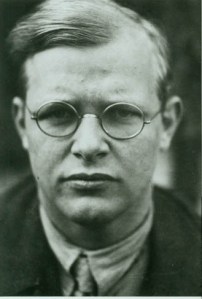
Dietrich Bonhoeffer

One such man was Dietrich Bonhoeffer, a brilliant theologian and humble pastor who wrote two of the great Christian classics of the twentieth century, The Cost of Discipleship and Life Together.

For Bonhoeffer, his faith was not just a private matter or limited only to the church. As he saw firsthand the horrors of Nazi Germany, he resolved to stop them and became involved in a plot to overthrow the government. The plot failed and Bonhoeffer was arrested. He eventually was martyred by Hitler, who imprisoned him in a German concentration camp and then hanged him.

Continue reading

The Great Commission

The Great Commission

The newly touted idea that “ekklesia” (the Greek word translated “church” in the New Testament) and the Great Commission are at odds is itself odd.

Jesus told His disciples:

“All authority in heaven and on earth has been given to me. Go therefore and make disciples of all nations, baptizing them in the name of the Father and of the Son and of the Holy Spirit, teaching them to observe all that I have commanded you. And behold, I am with you always, to the end of the age.” (Matt. 28:18-20 ESV)

The Great Commission applies, according to Jesus’ own words, through the “end of the age”. Any theology or view of “ekklesia” which ignores or somehow discounts that reality – out of reaction to real wrongs like man-centered discipleship or overwhelming external agendas that suck the life out of a church – is fundamentally flawed.

Continue reading

Celebrating 100 Years of Twisting, Licking and Dunking

Celebrating 100 Years of Twisting, Licking and Dunking

Today is the 100th birthday for Oreo cookies.

I LOVE Oreo cookies! They are proof that God loves us and has a wonderful plan for our lives.

Enjoying an Oreo cookie also theologically demolishes all arguments one may muster in support of a pessimistic, doom and gloom eschatology. Ah, the joy! 

But enough theology …

The great thing about Oreos is that they single-handedly satisfy the FDA’s recommended daily requirements for three of the four essential food groups.

Those four essential food groups are sugar, lard, chocolate and caffeine. To achieve a balanced diet, though, I often have a mug of hot coffee with my Oreos.

I once made the mistake of mentioning our four American food groups to a friend from Canada. He seemed surprised, and said he thought the four major food groups in the U.S. were fast, fried, deep fried and refried.

I told him that was only true in the deep south. In Virginia, by God, we may be south of the Mason-Dixon line, but we’ve managed to hold onto some remnants of high culture!

I must confess, however, that strawberry “fig” newtons are my other weakness. At least they provide some pretense of being healthy (applying snobbish standards), since they contain fruit (that red goo is real fruit, right? – if not, don’t tell me and destroy my ignorant bliss).

Anyway, happy 100th birthday.

Now where did I put my box of Oreos …

~ Jim Wright

Beyond Evangelical? (Part 2)

Post-Modernity

History Repeats Itself

History demonstrates that a mainly subjective faith is a largely anemic faith, which increasingly becomes insular and irrelevant.

In the 19th century, an overly subjective focus within the Christian community in the West produced an existential form of pietism, which said that everything about anything came down to one thing: a personal relationship with Jesus.

In the 20th century, this came to a more extreme fruition in the existential theology of Karl Barth. Barth concluded that the Bible is not the Word of God, but rather only leads us to the person of Jesus. Furthermore, our subjective experience of Jesus is the only valid authoritative revelation of God’s word. As such, Barth rejected the plenary authority of Scripture as the written Word of God, and it’s role in providing external standards for judging the authenticity of our experience of Jesus.

Continue reading

Beyond Evangelical? (Part 1)

Post-Modernity

The spirit of this age – at least in the West – is post-modernity, which views reality as subjective and truth (if it even exists) as individual and relative.

It is not all bad, but neither is it Christ!

Steeped in a post-modern culture, Western Christians are increasingly re-defining Jesus through post-modern sensibilities that we’ve uncritically inherited from the world.

As a result, we focus on a personal, highly individualistic relationship with Him – which is often driven more by our own needs, our own hurts, and our own insecurities than by Jesus Himself.

Continue reading

The Mythology of Tithing

Did you know that tithing is never mentioned once in the New Testament, except for a few references in the context of Old Testament practice?

Money or Life?

I’ve been wanting to write this blog for nearly a year now, but just didn’t have the energy to face all of the likely rage from those who have a vested interest in promoting the tithe as a sacred cow of the institutional church.

So here’s the simple fact: Tithing is not ever mentioned in the New Testament as something for Christians to do or as a valid practice within the church.

Nope, nada, zip, nyet, just not there!

Continue reading

Being the Church

This short video brought tears to my eyes over my longing for authentic church to take root throughout our communities.

Some of us are beginning to find it, but it’s very very rare in an age when church is little more than a set of programs, performances, ministry teams, leadership structure, buildings, budgets and Sunday services centered around the vision and abilities of some gifted man.

As you watch, listen with your heart to what the Lord may want to say to you. All over the world, He is birthing in more and more people a longing to once again be the church. It takes courage and there are birth pangs, but trust me, it’s worth it!

By Kelly and Niki Tshibaka.