Sufficient Grace, Part III

Several have asked how things are going with my health, so I though I’d post a quick update to my prior posts (Sufficient Grace and Sufficient Grace, Part II).

Peace in the Storm

Two weeks ago I was accepted into a NIH Phase II clinical trial which is evaluating two drugs for treating pulmonary fibrosis in scleroderma patients.

That I was accepted is a miracle because my lung function was just below their minimum. It’s a double blind study, so I don’t know which of the two drugs I’m taking (either cytoxan or cellcept), but they are both really strong, serious medications that typically have significant side effects.

My close community of brothers and sisters here in Virginia, and others, have been lifting me up in wonderful prayer. It has been mature prayer, not desperate prayer, rooted in making our requests known but also being at peace in God’s ultimate grace and sovereignty.

Continue reading

Sufficient Grace, Part II

As my close friends know, for the last seven years I’ve been dealing with a rare autoimmune condition called scleroderma (also known as systemic sclerosis).

Recent medical tests indicate that it is now impairing my lungs. This is a progressively debilitating and likely fatal development, and there is no known cure. I was not surprised by the latest test results, as I’ve been feeling my health deteriorate more rapidly over the last several months.

I’m posting this to be transparent and so none of my friends feel blindsided. I am totally open about what’s happening, and not bashful over it, so don’t feel you have to ignore it when you’re around me. If you have questions or want to just talk about it, feel free!

However, I also do not want it to define me. My life has been, and will continue to be, about so much more than this disease!

Continue reading

Becoming Our Past

Often, longstanding hurts, disappointments and emotional wounds are like old, familiar friends. We let them become so engrained into our sense of identity that they begin to define us.



When that happens, we often aren’t willing to transparently expose and turn them them over to Jesus, but tightly hold onto them like a child clinging to a security blanket.

Instead of finding transformation and wholeness, we become our past.

If this is a struggle for you or someone you know, let me suggest an old blog I wrote years ago called God Shows Up. It’s a good starting point on the road to healing.

Room at the Inn

Is there still no room at the inn?

It’s not too late:  Invite to your time of Christmas family sharing, or to your Christmas meal, that man or woman who recently was released from prison, or that person who has no family in your area and is alone, or someone who is destitute and living in the woods near your home (trust me, they are there).

Embrace

You and your family will bless them, and be blessed, more than you can ever imagine.

If you don’t know anyone to invite, call your local homeless shelter or battered women’s shelter. Ask for the staff person on duty. Tell him/her you want to invite someone to join your family Christmas morning, or to share a Christmas meal at your home.

Let them know if you are interested in inviting a family, or maybe just an individual or two, and ask for their recommendation. They will know the residents, and will do a good job introducing you to an appropriate person or family.

Some of my most enduring friendships have come from reaching outside my comfort zone to those who are destitute, abandoned, imprisoned or just plain alone. It will change you far more than them.

And please, don’t try to “fix” them – just be a friend. The rest just sort of follows naturally – including them fixing you as you open your heart and your life to those who you previously treated as “other” or only “helped” through impersonal “programs”.

Take a chance. Open your home and your lives to embrace the Joseph’s and Mary’s of our age.

This is true church. This is true religion. This is true grace.

~ Jim Wright

Subscribe

I Am Content

Marianne

Marianne Wright

I’ve advised Presidents and heads of state,

And ministered forgiveness

To murderers and inmates,

In Your name.

I’ve been rich,

But know poverty.

I’ve plowed the earth

And wiped sweaty dirt from my face,

Yet poked holes in clouds.

I’ve seen the world,

Stood firm against oppression,

And dodged its secret police,

While dancing with gypsies.

I’ve changed laws

And the course of nations,

While counting the homeless

Among my closest friends.

I’ve led the march of thousands,

And brought stadiums to their feet,

Yet walked with death and a cane.

I fought the mob and won,

And quietly saved my daughters

From their threats,

Yet been broken and used up.

I’ve known the joy of hopeless battles won,

And the brotherhood of warriors brave,

Yet cried alone before their graves.

I’ve spoken truth to power,

Hugged the brokenhearted,

And helped set the captive set free.

For all these things, Lord, I am grateful;

It’s been a life well lived.

But most of all,

I thank You that love did not pass me by:

For the joy of Marianne’s embrace

And the wonders of her grace,

I am content.

~ Jim Wright

The Road to Grace

For the institutionally religious, the road to grace is the toughest journey they’ll ever face.

For me, this certainly has been the case. And although the road to grace has been a wonderful journey, there have been many bumps and detours along the way. But slowly, I’m finally starting to find my way forward.

It’s Jesus in me and Jesus through me, so that it becomes possible to have Jesus in us and Jesus through us.

So much of my life over the last five years has been about the Lord reducing me to that simple truth.

Continue reading

Beauty from Ashes

Since early this year, I’ve been working on a huge sex abuse case involving a large, local Assembly of God church.

Hurt and Confusion

The human carnage and shattered lives have been great.

I take on these kinds of cases not only because I believe in justice, but because I also believe in redemption. Often, I have the privilege of seeing God’s grace shine through as healing comes and the survivors begin to find the strength to reclaim their lives – and their stolen voices.

As I interview and get to know various survivors and their families, I’m often asked if the pain will ever stop. I tell them how I have seen God bring beauty from ashes time and again, both in others and in my own life.

It is hard, but once we pass through the fire and begin to see what God does with the ashes of our lives, we experience gratitude for who we start to become.

Continue reading

The Storm

The Storm

There is something in the prophetic personality that loves the thunder, the lightning and the storm.

I get a kick out of standing outside and watching the dark, billowing clouds roll in. We feel God’s majesty in turmoil, and know that He often uproots before He establishes.

I think we feel His mercy more deeply, but also differently. Because our personalities are especially attuned to His power and redemptive judgment, we more fully appreciate His grace.

That’s why we embrace the oppressed and battle tyrants, while relishing the storm.

~ Jim Wright

Understanding the Seven Motivational Gifts

This PowerPoint presentation looks at the seven gifts listed in Romans 12, and the motivations and ways that different people use those differing gifts. More significantly, what is the resulting fruit when your church allows those seven gifts to be fully expressed in its structure, ministries, leadership, meetings and day-to-day fellowship?

Continue reading

Helping or Enabling?

It’s hard cut lose a man you’ve been ministering to and let him ultimately bear the full consequences of the mess he’s made of his

life – not to hurt him, but to let him finally hit bottom.

I am friends with and minister to men and women who most people, and many churches, shun (except for arms-length “programs”, if even that). Pick a vice – any vice – and I’ve likely come beside and embraced those in bondage to it: former drug addicts, narc dealers, sex offenders, embezzlers, thieves, gender benders, Satanic ritual abusers and even murderers.

Because I’ve been willing to see past the sin and accept the common humanity we all share – not as one who is perfect but as a someone willing to walk with them as we sort out our individual imperfections together under God’s mercy and grace – some of these folk are now following the Lord.

I love such people, because daily I see how God creates beauty out of their ashes.

I am blessed, because I serve a God who, above all, creates. He takes destruction – what has become void and without form, in the words of Genesis 1 – and brings wonder and life and order. . .

. . . and He delights most of all, I’ve found, in redeeming lives that many think are beyond hope.

Continue reading

The Gospel vs. Religion

Tim Keller, an author (The Reason for God, Counterfeit Gods and Prodigal God) whom I have come to deeply respect (and who also happened to attended Westminster Theological Seminary — although I don’t recall that we knew each other), developed this list comparing the Gospel to Religion.

It’s a good focus for prayerful meditation as we each come before the Throne of Grace and let the Lord change our perspective. Only by letting Him change our perspective — the way we think and believe and react — can we be transformed into the men and women He lovingly calls us to be.

Continue reading

True Ministry

Last night, we had one of our best times of “participatory church” as we seamlessly shared a meal, partook of communion, fellowshipped and ministered one with another — and none of it depended on me!

The last several weeks have been very emotionally and physically exhausting for me. On top of my best friend dying, I’ve been struggling to keep up with my various professional and counseling commitments while concurrently experiencing a particularly bad bout of chronic fatigue from my autoimmune condition.

Continue reading

Ken Hornby (1945 – 2010)

Kenneth Lewis Hornby — a pastor, mentor, mutual confidant, fishing partner, flying buddy and friend who was closer than a brother — died early this morning after an extended battle with cancer.

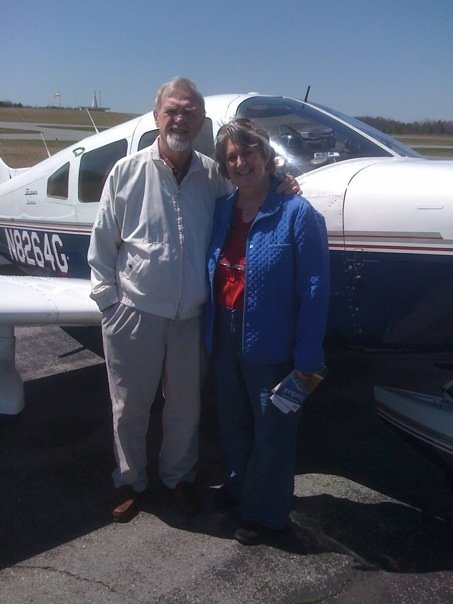
Ken and his wife, Mary Lou, loved to go flying in my plane

Although he was my best friend, Ken and I had a relationship that transcended mere friendship.

We were so opposite, but so complementary, that it was sometimes scary how God nonetheless knit us together. Ken taught me heart, while I taught him rock. We irrevocably changed each other.

Last summer, I felt the Lord gently tell me that Ken was going to die. When we met a couple of days later for breakfast, Ken on his own initiative – and without me mentioning anything – said God showed him in a recent dream to prepare for an prolonged, painful death.

I knew in my spirit that Ken was right. As we continued to talk that morning about his own inner – and very human – struggles, I quietly resolved to be a pillar of support for him in the coming months.

Although Ken had previously battled cancer, including two major surgeries, his long-term prospects until then had been hopeful.

Continue reading

Regeneration

A friend posted this short video on Facebook and it’s too precious, timely and relevant to pass up. As you listen, may God mercifully and lovingly wound you in order to heal you.

It’s by Paul Washer, who I first mentioned in a blog back in March (see God Is Not Passive). His burden for the Church touched my heart then, and continues to do so now.

Continue reading

The Gift of Mercy

The Gift of Mercy

Of the seven spiritual gifts listed in Romans 12, the last – but, I believe, the greatest yet least appreciated and most abused – is mercy.

As I watch and sense what God is doing with an emerging new spiritual generation, I see that their dominant characteristic is mercy. I also have begun to realize that God wants to use “mercies” (those with the primary spiritual gift of mercy) as catalysts to unleash additional gifts in others. That, in turn, will bring this rising generation to new pastures where God wants to dwell among us.

This doesn’t mean everyone in this new spiritual generation has mercy as their dominant individual spiritual gift. But as a whole, they nonetheless seem to collectively exhibit the main motivations of mercy – which are a deep, personal craving for the presence of God and for genuine intimacy with others.

As a result, this rising generation has little interest or patience with the moral and cultural wars of my generation, or with our prevailing hypocrisy as we tried to fix everyone else but failed to exhibit God’s presence in our own lives. Nor can they understand the focus on programs and institutions – with a resulting lack of authentic community – among older Christians.

Continue reading

The Church in D Pod

This Sunday, like most Sundays, I will be fellowshipping with the “Church in D Pod” at the local jail.

D Pod is a unit housing around a hundred men, and God has been pouring out his new wine in an exciting way among those inmates.

A couple of months ago, I started shifting my focus from “conducting” church services “for” the men. God was challenging me to start mentoring and training them instead to “be” the church by learning to minister one to another.

At the same time, God sovereignly arranged for two brothers from Africa — where Christians generally are way ahead of their American brothers and sisters on these issues — to be jailed in that unit. They, too, understood the concept of ministering one to another and started fostering authentic fellowship among the men.

Continue reading

Dealing with Chronic Fatigue

My closest friends have seen me walk through some very difficult times with my health over the last several years. Where others see the “together,” upbeat and accomplished Jim, they see the reserved, careful and slow-paced Jim who is learning to live with chronic fatigue.

This all started several years ago. I had founded and was running a number of successful international businesses, including a law firm and a cutting edge scientific consulting firm. But in 2006 I had to walk away from it all due to debilitating chronic fatigue that began more than a year earlier.

Stress As a Factor

At first, I thought I was struggling with routine burnout – which I now realize may have been a factor but was not the full story. In early 2008, my doctors discovered that I had been suffering from a very rare autoimmune condition called systemic sclerosis (sometimes known as scleroderma).

Initially, I was relieved to know that my fatigue wasn’t “all in my head” and that I really hadn’t gotten lazy. But that didn’t make the fatigue or the impact it was having on my life any less devastating.

Eventually, as I researched systemic sclerosis and talked to my doctors, I learned that stress – as typically is the case in many autoimmune diseases – was a big issue. It doesn’t necessary cause the disease, but it can trigger the onset and then exasperate the symptoms.

With me, those symptoms – which on top of the fatigue also included mild depression, chronic pain and joint stiffness – had become so bad that in 2007 I couldn’t function anymore in the basic aspects of life. By early 2008 I was reduced to walking with a cane due to the fatigue and the overall pain, and my prospects were bleak.

I ended up losing everything: my marriage, my family, my businesses, my wealth and eventually my sense of self.

Since then, God has been bringing resolution to many of the stressful relationships that were making things worse – sometimes by giving me the grace to let folks go who couldn’t otherwise handle my deteriorating situation.

As I began to find my validity in how He defines me – rather than how I and others were defining me – I’ve seen great improvements. As part of that process, I’ve also been learning to manage any stress that still occasionally surfaces by understanding, more and more, that God – rather than some circumstance – is sovereign over my life!

Overall, as I’ve been re-discovering the joy and wonder of life, most of the more severe symptoms of the disease have abated. The pain has lessened (although I still need various medications, but at greatly reduced doses) and since early this year the intensity of the fatigue has decreased.

Nonetheless, I still have fairly constant, low-level chronic fatigue.

Running Out of Energy

To those wondering about chronic fatigue, the best way to describe it is to contrast my life with “normal” folks.

Most folks wake up each morning with essentially a full reservoir of energy. Think of it as a big gallon jar (although the size of the jar will vary from person to person) that’s filled with stamina and spunk.

Someone who is healthy uses and replenishes the energy in their jar throughout a typical day. They do some things that are a net energy drain, but they also restore their stamina by doing other things that energize them. Those things vary from person to person, but their jar very seldom runs totally dry and after a good night’s sleep the jar usually is full again and ready for a new day. (And please, don’t tell me how drained you are at the end of the day — unless you have experienced chronic fatigue, you have no idea how much energy you really have even after a particularly exhausting day!)

Someone suffering from chronic fatigue has the same gallon jar, but they struggle with all of the expectations – both their own and from others – of what they once could do each day with their normal reservoir of energy. But now the gallon jar is never full – it is partially empty even when they wake up from a good night’s sleep. More significantly, as they participate in the activities of life, those things that once energized them can’t replenish their energy as quickly as before.

Two Kinds of Fatigue

With my systemic sclerosis, I’ve experienced two kinds of chronic fatigue. With one kind, the valve used to draw energy out of my jar is very, very constricted. I can’t suck much energy out at any one time. It’s like stepping on the gas pedal, but the car barely sputters along and lacks power. There’s gas in the tank, but I just can’t get it flowing fast enough to run the engine at full speed.

That’s what it was like when my fatigue started and I ended up divesting myself of all of my business and professional interests. I just couldn’t get enough energy flowing to do much of anything. The simple, routine tasks of life were nearly impossible — even when I was motivated and wanting to do more.

With the second kind of chronic fatigue, the valve is able to handle a full flow of energy and I rev up my engine just like normal people. The problem is, there’s just not as much energy to keep that flow going. In this example, I step on the pedal and the car accelerates to 60 mph just fine, but it’s just not going to go very far before the tank runs dry. To use another analogy, I am “good in the moment” and full of spunk and life, but when the task at hand is finished, so am I! This is more like my life now, although I’ve learned some important coping mechanisms.

Pacing Myself

Under either type of chronic fatigue, I’ve learned to pace myself if I want to keep from depleting my energy jar. I don’t have as much energy in my jar as most folks, and even if I’m able to get a good flow of stamina going, I know I can’t replenish that energy fast enough to take on the whole day at a “normal” pace.

This means I need to carefully regulate my activities throughout the day so that I don’t use more energy than is needed for the entire day and it’s expected activities, while also protecting my ability to do those things that energize me (howbeit more slowly than normal) – which may be a nap, lunch with a close friend, taking a quiet walk, reading a good book, generally just chillin’ out, bass fishing or whatever.

For those suffering from chronic fatigue, and those dealing with this condition in friends and loved ones, accept what’s happening. Denial is deadly! Everyone involved needs to adapt to an entirely new reality. If you have chronic fatigue, don’t beat up on yourself because you can’t do everything you once did at the pace you once did it. Such guilt only causes more stress and makes your situation worse. Rather, find joy in simplifying your life and learning to focus on what’s truly important. Also learn to let others do some of the things for you that you previously did yourself – for me, allowing this remains very hard but I’m learning to adjust.

Most of all, learn to monitor how much energy you have left in your jar at any given time, how much energy is needed (and how quickly you need it) when evaluating what you should and shouldn’t do, avoid over-doing things, and find time for the things that uniquely replenish your energy reserves (while factoring in the reality that it will take longer than normal).

Adjusting to Reality

When dealing with chronic fatigue, you will feel guilty and struggle for a season over what you can’t do. Others may not understand your slower pace, or why you can be perfectly “normal” when doing one thing but then need to excuse yourself from further activities. But if that relationship is worth keeping, they will learn to accept and understand your limitations. But most of all, take joy in learning all of the new things you can do as you re-order the obligations and responsibilities of life. If you let it, that will be a wonderful journey of discovery.

The bottom line is that you need to get comfortable with figuring out your own pace and activities so that you minimize how frequently your energy jar runs dry. It will take some time, but I’m learning that it certainly can be done.

Despite it all, I have found that a slower paced life – where I can take the time to relish fulfilling relationships, focus on the truly important things of life, and enjoy those things that renew my energy – is more fulfilling than my past life. For that, I’m grateful and I can’t imagine ever going back to the hectic, stress-filled existence I once fought so hard to foolishly preserve.

In an odd way, I have become a better and a happier person.

~ Jim Wright

Related articles

Fellowship and Light

Self Delusion

Self Delusion

“This then is the message which we have heard of him, and declare unto you, that God is light, and in him is no darkness at all. If we say that we have fellowship with him, and walk in darkness, we lie, and do not the truth:  But if we walk in the light, as he is in the light, we have fellowship one with another, and the blood of Jesus Christ his Son cleanseth us from all sin.

If we say that we have no sin, we deceive ourselves, and the truth is not in us. If we confess our sins, he is faithful and just to forgive us our sins, and to cleanse us from all unrighteousness.” I John 1:5-9 (KJV)

Continue reading

Leadership Burnout

Many leaders – including church leaders – suffer from burnout due to emotional and spiritual wounds which they mistakenly rationalize as Godly brokenness. But it’s not; it’s just profound hurt.

In their despair, they often become soothed by God’s love in their woundedness and want to stay there. The problem with unresolved wounds, however, is that they ultimately debilitate us, but Godly brokenness can bring new life – and sometimes literally a new life – if we let it.

That’s because true brokenness goes beyond hurt and changes the core of who we are – and if we’re willing to meet God there, He’s able use our burnout for our ultimate good.

Continue reading

Rick Warren Disavows Support for Prop. 8

This article (see full text here) confirms my worse fears about Rick Warren, who has shown a troubling tendency to fall into the false trap of thinking that “compromise” is “compassion”. Worse still, he then publicly lied about prior comments he made on the issue of “gay marriage”.

The great thing about America is we have the right to be wrong. But that doesn’t mean we must have state-sanctioned sin. I minister a lot to people dealing with homosexuality, and showing grace to those in bondage to homosexuality does not mean compromising the truth. Grace and truth are not either/or, but yes/and. Grace without truth is sloppy agape that leaves us in bondage, while truth without grace is death. But when we reach out with both, there is life.

This is Exhibit A on what happens when our “leaders” fear man more than God. God help us all if we allow ourselves to be reduced to this type of of “leadership” in the Church today.

Continue reading

Woundedness

On Sunday I taught men in the jail, using Psalms 116:5-7 (ESV), about moving from woundedness to life. I challenged them not to settle for mere comfort when confronting hurt, but to embrace life instead.

Gracious is the LORD, and righteous;
   our God is merciful.
The LORD preserves the simple;
   when I was brought low, he saved me.
Return, O my soul, to your rest;
   for the LORD has dealt bountifully with you.

When hurt and wounded, too often all we can muster is a desire for God’s comfort or soothing presence. Although he’ll sometimes do that, what he really wants is to move us past woundedness into brokenness – that low place where we are willing to surrender to him. Only then can we hope to experience the bountiful life, both in us and around us, that comes from finding and finally doing God’s joyous will.

Continue reading

Sufficient Grace

Sufficient Grace

When did Christians start believing that God wants us to always be healthy, wealthy and free of adversity?

If asked directly, most believers would deny that’s what they think. But our actions say otherwise.

A Devastating Diagnosis

I started noticing this when I contracted a rare, degenerative autoimmune disease called systemic sclerosis (aka scleroderma) in 2004. It took years to finally link my symptoms to a specific diagnosis, but when it came, it was devastating.

Although it initially hit me hard, it seemed to hit others even harder.

As family and friends learned of my condition, they often reacted with shock. Some simply deserted me – usually because they couldn’t deal with their own pain or awkwardness over my condition. Other times, they left because I couldn’t continue being the fount of money or financial security they had come to expect. I quickly learned who were my true friends, and my true family.

Praying At God

Among my remaining friends, many responded by asking to pray over me. Sometimes they’d say that God told them I’d be healed. Although God hadn’t told me that, I would be gracious, let them pray and listen to their assurances. I appreciated their concern, but what struck me most was how they were reacting more out of their own anxieties than anything else.

Because their theology couldn’t explain why God allowed this to happen to me, they needed to vigorously pray at God and at me in order to drown out their own uncertainties and insecurities. They knew that if this could happen to me, then it could happen to them or their loved ones. That’s not what they signed up for when they became Christians!

Rather than “hearing” from God about my situation, they were telling God what He needed to do or what they thought He should do. After all, if He’s God and all powerful, loving and just, then they couldn’t understand why bad things happen to good Christians.

Don’t get me wrong. I appreciate prayers! But prayers motivated by anxiety over God’s seeming failings, and by our own fears over sickness and adversities, quickly become tiring to the purported beneficiary.

I have one very close friend who’s an associate pastor. He has cancer and would duck out of church several minutes early to avoid all of the “words from God” and anxiety-filled prayers that otherwise descended on him at the end of each service. I could relate (although things have since cooled down for me, and, I understand, for him too).

Touching God’s Heart

When I was first diagnosed, maybe one out of twenty-five of my remaining friends and acquaintances, at most, would actually come and pray for me in the security of God’s sovereignty and could then truly touch God’s heart regarding my condition. And God’s heart was to simply say He was with me. By ministering from that place of peace which only comes from total surrender to God’s will – without presumption or expectation of outcome – their prayers were like cool drinks in a barren land.

Those ministering out of anxiety, however, couldn’t understand why God would let this happen. Implicit was the assumption that God owed me, and Christians in general, a free pass when it comes to the realities of our fallen world and imperfect mortal bodies.

But there’s no such promise in Scripture. Rather, God simply assures us that His grace is sufficient for all that may befall us.

Peace Despite an Uncertain Fate

I have several very close friends who also have faced a life threatening issue or other major crisis. Once they were able to accept God’s grace in their situations, and surrender to His will without precondition or expectation of outcome, a depth of fellowship and understanding developed between us that’s hard to describe. To a person, we would not trade that grace for anything – including health and healing.

I’m no saint, and I have my down days. I want to be a good steward and so I struggle at times with my future and with what, if any, plans and decisions I can make given my uncertain fate. But generally, the high price of admission has been worth the grace gained as God embraced my infirmities.

Unless you too have been there, I suspect this is hard to understand.

It’s not fatalism – far from it. It’s life from brokenness. It’s peace and calm from being able to finally surrender to God’s perfect will, even with no idea what His will may be, because you finally understand – both at the logical and also at the emotional level – that life only has significance and fulfillment in Him. He created us, so who knows better what to do with our lives?

It’s not premised on any assumption of outcome, other than knowing that your life never belonged to you anyway and it’s God’s to do with as He pleases – even to the point of death.

Becoming Whole Despite Infirmities

I’m in God’s hands. If His will is to call me home, that’s OK. If His will is healing, that’s OK too. If it’s something in between, then there is peace in the promise of His grace for the journey.

It is, more than anything else, being with Jesus in the garden on the night He was betrayed. He was all too human as He cried out for deliverance from His impending cross. After getting past His initial deep, deep anguish, Jesus found assurance only when He could truly say to the Father “not my will, but thy will be done.” He could then endure the cross because of the resulting peace that comes from trust and obedience.

To my healthy friends, think about this. If everyone who made Jesus their Lord suddenly experienced perfect health, perfect wealth, and no adversity or pain, then who would come to Jesus for Jesus’ sake? No one, that’s who! We would all flock to him for what He can do for us, rather than for what He wants of us.

And what does He want? Simply everything, including our will and our very lives. He then uses our total commitment to redeem His creation, despite its fallenness

And to reconcile people to Himself, despite our brokenness.

In His wisdom, God normally doesn’t exempt us from our frailties or the consequences of a fallen world. Rather, He makes us complete in our weakness. Our lives then demonstrate that His grace is sufficient, despite the consequences of humanity’s rebellion, and that it is only through Him that we become whole, despite our infirmities.

I truly don’t know what God intends for me. I only know that I need to walk in His grace and abide in His will day-by-day as I trust my future to Him – without any presumption of outcome.

When He’s done with this life, He’ll take me home. Until then, my life is His and my imperfect desire is to serve Him with all I have, and all I am, as He gives me grace for the journey ahead.

(c) Copyright 2009, Fulcrum Ministries. All Rights Reserved.


.

Soon after writing this in early 2009, my systemic sclerosis began to slowly and miraculously retreat and by the end of 2009 had gone into low level remission – to the astonishment of my doctors. Needless to say, however, the experience of dealing with the implications and initial health effects from the disease changed me deeply.

In late 2011, my symptoms started re-surging, and in early 2012 a pulmonary function test indicated that the disease had entered my lungs, which is not good.

Although I don’t know what the future holds, I nonetheless remain eternally grateful to have found sufficient grace. Or, to put it more accurately, that Sufficient Grace found me.