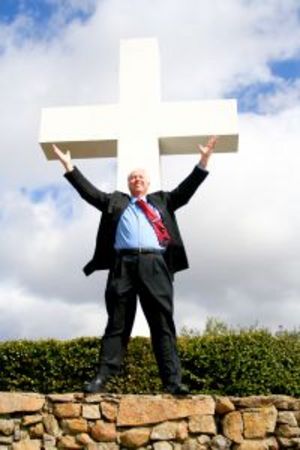
Eating of the Tree of Life? Watch Out!

A strange new doctrine has emerged over the last decade to support the old dualism of everything being about my personal, subjective relationship with Jesus – to the exclusion of any transcendent, objective moral code or (in some extreme cases) even Scripture itself.

Choosing Moral Autonomy

The new doctrine goes like this:

God wanted us to eat of the Tree of Life in the Garden of Eden. Adam and Eve, however, rebelled and chose instead to eat of the Tree of the Knowledge of Good and Evil. The Tree of Life, they say, is Jesus (which I think is questionable, given that Jesus walked with Adam in the cool of the day and obviously was not a tree, but that’s not my point).

This new doctrine goes on to say that we should only want the subjective, relational attributes of Jesus and not let any objective concept of what is true, real and right get in the way. This is because, they say, the Tree of the Knowledge of Good and Evil represents things like morality, objective standards, Scripture, commandments (again, this is of dubious exegesis, but again, that’s not my point), and anything else that may contradict their feeling-driven experience of Jesus .

Like all great errors in Church history, this one has enough truth to be tempting. But truth out of context is deadly.

Continue reading

“Beyond Evangelical” by Frank Viola: A Review

“Beyond Evangelical” by Frank Viola: A Review

I just finished reading, from cover to cover, Frank Viola’s new book “Beyond Evangelical”.

Although it largely consists of re-prints of his prior blogs, it has lots of good stuff … so long as you take it in context.

That context is a repeated emphasis by Frank on an way of relating to Jesus and the world which is sometimes called Christian existentialism, which is hardly surprising given his repeated praise in his blog of existentialist theologian Karl Barth. That existentialism seems to be rooted in the belief that all externals (social problems, cultural problems, family problems, church problems, etc.) will be resolved as we internally connect with the person of Jesus. When we do this collectively as “ekklesia” (the Greek word translated “church”), we then fulfill God’s “grand epic”.

Although this sounds good, most problems throughout church history come from truth out of balance. Presumably, anything outside of Frank’s understanding of who Jesus is, and what Jesus is about, is a distraction. (See my prior blog series, Beyond Evangelical?) Frank Viola nonetheless goes to great length justifying his existentialism by proclaiming the truth that “Christ is all”, but then makes the mistake of interpreting that truth in ways which limit Christ and thus lead to a new legalism.

Beyond Evangelical, by Frank Viola

Whereas the old legalism, which he does a good job of picking apart, was all about “doing” and “not doing”, the new legalism is all about telling folks what Jesus should look like in us, and thus who we can “be” and “not be” in Christ. Along those lines, his book is an apologetic for how Christ from his “beyond” perspective should be the new norm, combined with a polemic against how Christ is expressed in others.

As I’ve noted before, however, the “all” in Frank Viola’s “Christ is all” looks and feels to many of us who’ve been around longer than Frank to be little more than a narrow set of sensibilities that are essentially millennial and post-modern in attitude. This is in contrast to the differing concept others of us embrace – of a multi-generational, multi-graced, multi-called and multi-gifted Body of Christ that includes all “tribes” (to use Frank’s term).

I’ve said it before, and it bears repeating: I am not beyond any other segment of the Body of Christ. I have yet to meet a brother or sister in Christ who can’t teach me something of Christ, because something of Jesus is expressed in all of us. I have something of Christ to offer you, and you have something of Christ to offer me. That, in a nutshell, is the Body of Christ in all of its multifaceted glory.

This book, at its heart, is Frank Viola’s apologetic defense of his “beyond” tribe as against all other flavors of evangelicalism. Rather than seeing the strengths of other tribes and how they have much to teach and add to his “beyond” tribe’s own grace, gifts and calling, he keeps talking in very general terms about how his “tribe” is beyond them.

He does this by putting folks into very artificial categories – often with somewhat inaccurate characterizations, sometimes grossly distorted histories (the errors of which I can personally attest to based on my own direct involvement) , and repeated warnings about all the problems found among other classes of Christians. Yet those other believers who he keeps characterizing in unflattering ways (yet with a measure of charm) candidly look nothing like any fellow believers I know.

In essence, Frank Viola puts everyone into categories to contrast the rest of the Body of Christ with his own tribe – while also paradoxically going out of his way to say we should be beyond categories.

For example, I kept reading his descriptions of all those bad “fundamentalists” and “Religious Right” boogie men – with stereotypes that seemed to be lifted more from the editorial pages of the militantly secular NY Times or the diatribes of MSNBC talk show host Rachel Maddow than from any real fellowship with real brothers and sisters in Christ – and just shook my head over and over as I kept trying in vain to think of anyone I actually know who actually fit his prejudicial caricatures.

But hey, let’s not let real brothers and sisters in Christ – with real lives – get in the way of a good narrative on how my group is “beyond” everyone else. Right?

My point is not to defend those who he disparages – they can defend themselves. Rather, it is to call him to task for his polite yet nonetheless divisive, sectarian and dismissive rhetoric, while he repeatedly decries others who are divisive, sectarian and dismissive towards him.

In pointing out all the flaws of others – in a very charming and nice way, which I couldn’t help but admire – Frank Viola then fails to give a single real life or practical example of how his “beyond” approach would look or do things differently. Again, there is not one concrete, real world, real life example in the entire book. None, nada, zip. It is simply a litany of aspirational platitude after aspirational platitude – some good, some naive, and some certainly open to a more balanced, inclusive perspective.

“Beyond Evangelical”, like much of Frank’s blog by the same name, legitimately raises valid questions. I agree with him on the need to move from isolated individualism to a more comprehensive expression of “ekklesia”. I commend him for that, although I have a broader view of Christ and His Body than the existential theology my “Beyond” brethren might allow. Nonetheless, this critique of his book comes from the perspective of “ekklesia” – as my life is devoted to finding, experiencing and working out what ekklesia looks like with an active and diverse community of fellow believers here in Virginia.

Yes, Christ is all, but our “all” looks a lot bigger in our fellowships than Frank Viola’s “all”.

Otherwise, from a purely aspirational point of view there is not much to dislike in Frank’s book. But if you are looking for substance and – like me – looking for him to articulate clear alternatives beyond his platitudes and his contrasting negative stereotypes, then you will be left hanging.

It is the easiest thing in the world to point out the splinters in everyone else, but to not see the log in one’s own eye.

In my experience, there are some big log’s in the eyes of the “Beyond” tribe. My challenge to Frank Viola is to prove me wrong: Give us examples. Surely, after all these years of touting what I see as a somewhat myopic existential view of what “Christ is all” means, he can start to point to examples of how real people are doing real things to express his “beyond” platitudes in the real world – beyond their own individual faith and beyond what strikes many of us as their insular fellowships and tendencies toward a rather insular faith. Both his blog, and this book, utterly fail to do so.

Rather than build relationships between various parts of the Body of Christ as we learn to esteem one another above ourselves, my overall concern continues to be that Frank feeds the growing alienation of his tribe from the broader Body of Christ. Of course, in the book he denies this, but it’s there and is a glaring blind spot nonetheless.

I think the ultimate criteria for evaluating “Beyond Evangelical” is this: After reading the book, would a typical millennial Christian (according to Frank, this is his primary focused audience) – who may be steeped in post-modern sensibilities and feel alienated – be more likely to seek out and press into a multifaceted, multi-generational and multi-“tribe” expression of Body of Christ, or less likely?

Some may disagree with my specific critique of the book, but that bottom line question fairly well sums up all of my concerns.

I believe Frank Viola still has much to offer the rest of us so long as he grows beyond the stark limitations of his Karl Barth Christian existentialism and its associated post-modern sensibilities. But I fear, instead, that this book will only reinforce the trend within Frank’s “beyond” tribe to remain mired in its millennial post-modern sensibilities by dismissing much that the rest of the Body of Christ has to offer them.


Modern Day Pauls?

masks

Many tout themselves as apostles and modern-day church planters like Paul, but where’s their Antioch?

Although Paul functioned as an apostolic church planter, he remained grounded in and part of a functional local church in Antioch like those he was helping to start elsewhere.

All too often we ignore the fact that Paul went on his apostolic missions only after being commissioned and sent by his local church, and that happened only after he’d proven himself over many years in the context of a local, functioning fellowship.

At the end of his various journeys to help start and encourage other churches (except for his last, where history says he was beheaded in Rome), he would then return for a season to his home church in Antioch before being sent out again.

In contrast to Paul, be wary of gifted but itinerant men and women who want to “help” you form or succeed as a local church – through their books, blogs, podcasts, seminars and requests to visit you – yet lack ongoing community with, proven roots in, commission from, and accountability to another functioning local church.

Some of us have been around long enough to see prior incarnations of such floating, unattached “ministries” to local churches.

In the 70’s and 80’s, they proliferated within the Charismatic movement – mainly among those who were certainly gifted but nonetheless could never succeed at finding healthy church with accountable community in their own lives.

Often, they were authors or good aspirational communicators who had exciting ideas, but only answered to themselves.

Sometimes, however, they’d form loose associations where they purportedly answered to each other in lieu of having any Antiochs in their lives – which only tended to reinforce the shared theological and personal idiosyncrasies which attracted them to each other in the first place.

More recently, we saw it in the “organic church” movement, as itinerant “workers” (their euphemism for “apostles”) like Frank Viola, Jon Zens, Milt Rodriquez and their buddies wreaked havoc on countless house churches. Almost none of those assemblies survived.

Without exception, over time problems emerged with each and every one of those so-called apostles and “church planters” – and with the churches that listened to them.

And I mean that – I can’t think of a single one who did not fall prey to one disqualifying problem or another, often related to pride or just becoming increasingly isolated and weird.

There’s too much of this stuff starting to emerge again today, especially among those wanting to be the church one with another. 

Those who promote themselves, their services, and their agendas without living it and having made it first work – with accountable and sustainable results proven over time – in their own lives and hometowns are fraught with danger.

Ignore their lack of grounding in an actual, functional church like they promote to others, and you too will reap disaster.

~ Jim Wright

Beyond Evangelical? (Part 3)

Post-Modernity

The “You Can’t” Crowd

What I find most bizarre among emerging “Beyond Evangelical” authors is how vocal they are in telling Christians what we can’t do – we can’t be engaged in cultural or civic reform, we can’t go and disciple the nations, we can’t be engaged in politics, we can’t ever take a social position that offends, we can’t this, and we can’t that.

Sometimes, it gets so bad that you can only laugh.

Continue reading

Beyond Evangelical? (Part 2)

Post-Modernity

History Repeats Itself

History demonstrates that a mainly subjective faith is a largely anemic faith, which increasingly becomes insular and irrelevant.

In the 19th century, an overly subjective focus within the Christian community in the West produced an existential form of pietism, which said that everything about anything came down to one thing: a personal relationship with Jesus.

In the 20th century, this came to a more extreme fruition in the existential theology of Karl Barth. Barth concluded that the Bible is not the Word of God, but rather only leads us to the person of Jesus. Furthermore, our subjective experience of Jesus is the only valid authoritative revelation of God’s word. As such, Barth rejected the plenary authority of Scripture as the written Word of God, and it’s role in providing external standards for judging the authenticity of our experience of Jesus.

Continue reading

Beyond Evangelical? (Part 1)

Post-Modernity

The spirit of this age – at least in the West – is post-modernity, which views reality as subjective and truth (if it even exists) as individual and relative.

It is not all bad, but neither is it Christ!

Steeped in a post-modern culture, Western Christians are increasingly re-defining Jesus through post-modern sensibilities that we’ve uncritically inherited from the world.

As a result, we focus on a personal, highly individualistic relationship with Him – which is often driven more by our own needs, our own hurts, and our own insecurities than by Jesus Himself.

Continue reading

Regeneration

A friend posted this short video on Facebook and it’s too precious, timely and relevant to pass up. As you listen, may God mercifully and lovingly wound you in order to heal you.

It’s by Paul Washer, who I first mentioned in a blog back in March (see God Is Not Passive). His burden for the Church touched my heart then, and continues to do so now.

Continue reading

Evangelical Prophets or Martyrs?

I vividly recall leafing through World magazine back in 2006 and reading the unsettling but hardly surprising news that Randall Terry – the firebrand evangelical who formerly headed Operation Rescue and was then financially wiped out following a series of lawsuits by pro-abortionists – had joined the Roman Catholic Church.

“Unsettling,” because it provides further evidence of the growing weariness and disillusionment I’m seeing among spiritual “entrepreneurs” who’ve been laboring within evangelical circles to expand the Kingdom of God in all spheres of life and culture.

“Hardly surprising,” however, as those “on point” for the Kingdom increasingly seek refuge from the prevailing pop-theology (or dare I say lack of theology) and me-focused brand of Christianity that pervades evangelicalism (which includes charismatics and Pentecostals), animates many of our local church and national leaders, and cuts believers off from the great historic doctrines and creeds of our faith.

Continue reading

The Gift of Mercy

The Gift of Mercy

Of the seven spiritual gifts listed in Romans 12, the last – but, I believe, the greatest yet least appreciated and most abused – is mercy.

As I watch and sense what God is doing with an emerging new spiritual generation, I see that their dominant characteristic is mercy. I also have begun to realize that God wants to use “mercies” (those with the primary spiritual gift of mercy) as catalysts to unleash additional gifts in others. That, in turn, will bring this rising generation to new pastures where God wants to dwell among us.

This doesn’t mean everyone in this new spiritual generation has mercy as their dominant individual spiritual gift. But as a whole, they nonetheless seem to collectively exhibit the main motivations of mercy – which are a deep, personal craving for the presence of God and for genuine intimacy with others.

As a result, this rising generation has little interest or patience with the moral and cultural wars of my generation, or with our prevailing hypocrisy as we tried to fix everyone else but failed to exhibit God’s presence in our own lives. Nor can they understand the focus on programs and institutions – with a resulting lack of authentic community – among older Christians.

Continue reading

Them Dry Bones

It’s a beautiful Sunday morning here in Virginia, but I’m stuck with a lingering cold and sore throat. That gives me a good excuse to skip church and my ministry commitments later this afternoon in the local jail.

So what to do? I just let my ADD dog out and he’s happily occupied digging a new hole in my otherwise nice green yard, there’s some good coffee brewing (I’m partial to Gold Coast from Starbucks – two level scoops per 14 oz.), the light of a crisp blue March sky is streaming through my sun room windows, my favorite worship music is playing in the background on my iPod, and I’m relaxing in my over-sized Lazy Boy recliner thinking on the things of God.

I guess that makes this as good a time as any to bang out some thoughts on effective New Testament leadership.

Continue reading

Essentially Reformed or Hyper-Calvinist?

Essentially Reformed or Hyper-Calvinist?

I typically describe my Biblical perspective as “essentially reformed” because of the influence John Calvin’s writings, and his views on God’s sovereignty, have had on me. Yet I have this problem with so-called Calvinists and their attempts to hijack Calvin: Their extreme view of God’s sovereignty can’t be found in Calvin’s writings, and actually debases God’s sovereignty.

Continue reading