I Want More Religion (Part 2)

I’ve heard privately from some who were offended with my use of “lazy-assed” in my blog, I Want More Religion (Part 1).

In my own defense, I was going to say “stinkin’ white-washed sepulchres” and use a whip to toss some tables, but I thought I’d tone it down and used “lazy-assed” instead. 😉

Seriously, if we don’t get out of this post-modern, introspective, insular, Jesus-is-all-about-affirming-my-own-sensibilities funk, then there is no hope of redemption and wholeness – for ourselves, for those He calls us to tangibly love and bless with real deeds, or for our culture.

Continue reading

“Beyond Evangelical” by Frank Viola: A Review

“Beyond Evangelical” by Frank Viola: A Review

I just finished reading, from cover to cover, Frank Viola’s new book “Beyond Evangelical”.

Although it largely consists of re-prints of his prior blogs, it has lots of good stuff … so long as you take it in context.

That context is a repeated emphasis by Frank on an way of relating to Jesus and the world which is sometimes called Christian existentialism, which is hardly surprising given his repeated praise in his blog of existentialist theologian Karl Barth. That existentialism seems to be rooted in the belief that all externals (social problems, cultural problems, family problems, church problems, etc.) will be resolved as we internally connect with the person of Jesus. When we do this collectively as “ekklesia” (the Greek word translated “church”), we then fulfill God’s “grand epic”.

Although this sounds good, most problems throughout church history come from truth out of balance. Presumably, anything outside of Frank’s understanding of who Jesus is, and what Jesus is about, is a distraction. (See my prior blog series, Beyond Evangelical?) Frank Viola nonetheless goes to great length justifying his existentialism by proclaiming the truth that “Christ is all”, but then makes the mistake of interpreting that truth in ways which limit Christ and thus lead to a new legalism.

Beyond Evangelical, by Frank Viola

Whereas the old legalism, which he does a good job of picking apart, was all about “doing” and “not doing”, the new legalism is all about telling folks what Jesus should look like in us, and thus who we can “be” and “not be” in Christ. Along those lines, his book is an apologetic for how Christ from his “beyond” perspective should be the new norm, combined with a polemic against how Christ is expressed in others.

As I’ve noted before, however, the “all” in Frank Viola’s “Christ is all” looks and feels to many of us who’ve been around longer than Frank to be little more than a narrow set of sensibilities that are essentially millennial and post-modern in attitude. This is in contrast to the differing concept others of us embrace – of a multi-generational, multi-graced, multi-called and multi-gifted Body of Christ that includes all “tribes” (to use Frank’s term).

I’ve said it before, and it bears repeating: I am not beyond any other segment of the Body of Christ. I have yet to meet a brother or sister in Christ who can’t teach me something of Christ, because something of Jesus is expressed in all of us. I have something of Christ to offer you, and you have something of Christ to offer me. That, in a nutshell, is the Body of Christ in all of its multifaceted glory.

This book, at its heart, is Frank Viola’s apologetic defense of his “beyond” tribe as against all other flavors of evangelicalism. Rather than seeing the strengths of other tribes and how they have much to teach and add to his “beyond” tribe’s own grace, gifts and calling, he keeps talking in very general terms about how his “tribe” is beyond them.

He does this by putting folks into very artificial categories – often with somewhat inaccurate characterizations, sometimes grossly distorted histories (the errors of which I can personally attest to based on my own direct involvement) , and repeated warnings about all the problems found among other classes of Christians. Yet those other believers who he keeps characterizing in unflattering ways (yet with a measure of charm) candidly look nothing like any fellow believers I know.

In essence, Frank Viola puts everyone into categories to contrast the rest of the Body of Christ with his own tribe – while also paradoxically going out of his way to say we should be beyond categories.

For example, I kept reading his descriptions of all those bad “fundamentalists” and “Religious Right” boogie men – with stereotypes that seemed to be lifted more from the editorial pages of the militantly secular NY Times or the diatribes of MSNBC talk show host Rachel Maddow than from any real fellowship with real brothers and sisters in Christ – and just shook my head over and over as I kept trying in vain to think of anyone I actually know who actually fit his prejudicial caricatures.

But hey, let’s not let real brothers and sisters in Christ – with real lives – get in the way of a good narrative on how my group is “beyond” everyone else. Right?

My point is not to defend those who he disparages – they can defend themselves. Rather, it is to call him to task for his polite yet nonetheless divisive, sectarian and dismissive rhetoric, while he repeatedly decries others who are divisive, sectarian and dismissive towards him.

In pointing out all the flaws of others – in a very charming and nice way, which I couldn’t help but admire – Frank Viola then fails to give a single real life or practical example of how his “beyond” approach would look or do things differently. Again, there is not one concrete, real world, real life example in the entire book. None, nada, zip. It is simply a litany of aspirational platitude after aspirational platitude – some good, some naive, and some certainly open to a more balanced, inclusive perspective.

“Beyond Evangelical”, like much of Frank’s blog by the same name, legitimately raises valid questions. I agree with him on the need to move from isolated individualism to a more comprehensive expression of “ekklesia”. I commend him for that, although I have a broader view of Christ and His Body than the existential theology my “Beyond” brethren might allow. Nonetheless, this critique of his book comes from the perspective of “ekklesia” – as my life is devoted to finding, experiencing and working out what ekklesia looks like with an active and diverse community of fellow believers here in Virginia.

Yes, Christ is all, but our “all” looks a lot bigger in our fellowships than Frank Viola’s “all”.

Otherwise, from a purely aspirational point of view there is not much to dislike in Frank’s book. But if you are looking for substance and – like me – looking for him to articulate clear alternatives beyond his platitudes and his contrasting negative stereotypes, then you will be left hanging.

It is the easiest thing in the world to point out the splinters in everyone else, but to not see the log in one’s own eye.

In my experience, there are some big log’s in the eyes of the “Beyond” tribe. My challenge to Frank Viola is to prove me wrong: Give us examples. Surely, after all these years of touting what I see as a somewhat myopic existential view of what “Christ is all” means, he can start to point to examples of how real people are doing real things to express his “beyond” platitudes in the real world – beyond their own individual faith and beyond what strikes many of us as their insular fellowships and tendencies toward a rather insular faith. Both his blog, and this book, utterly fail to do so.

Rather than build relationships between various parts of the Body of Christ as we learn to esteem one another above ourselves, my overall concern continues to be that Frank feeds the growing alienation of his tribe from the broader Body of Christ. Of course, in the book he denies this, but it’s there and is a glaring blind spot nonetheless.

I think the ultimate criteria for evaluating “Beyond Evangelical” is this: After reading the book, would a typical millennial Christian (according to Frank, this is his primary focused audience) – who may be steeped in post-modern sensibilities and feel alienated – be more likely to seek out and press into a multifaceted, multi-generational and multi-“tribe” expression of Body of Christ, or less likely?

Some may disagree with my specific critique of the book, but that bottom line question fairly well sums up all of my concerns.

I believe Frank Viola still has much to offer the rest of us so long as he grows beyond the stark limitations of his Karl Barth Christian existentialism and its associated post-modern sensibilities. But I fear, instead, that this book will only reinforce the trend within Frank’s “beyond” tribe to remain mired in its millennial post-modern sensibilities by dismissing much that the rest of the Body of Christ has to offer them.

Fathers and Teachers

Fathers and Teachers

I keep hearing from folks who have felt troubled and marginalized by authors and bloggers who seem unable to go beyond their own sensibilities and who seek to make their own gifts and limitations normative for the entire Body of Christ.

In response, I can’t shake this urge to proclaim what I see in scripture and experience daily in our own fellowships: The multifaceted, multi-gifted, multi-called Body of Christ.

I am convinced that God’s heart is passionate about releasing His people to be all that He created them to be – not just in our churches, but in all spheres of life.

Our collective failure to do this – both within the institutional and organic church communities – and the insular, anemic fruit that has resulted, is one of the biggest challenges facing the West today.

Individual Limitations

Here’s the problem I see daily among individual Christians:

Those who are primarily motivated by the heart, feel all must be the same. Those primarily motivated by renewed minds, think all must be the same. Those primarily motivated by transformed wills, act as though all must be the same…

We are post-modern in our sensibilities, so all must be the same. We are called to this, or to that, and so all must be the same. We not are called to this, or to that, and so all must be the same…

Please, everyone, can’t we just stop this nonsense!

Yes, Christ is all. But is He just Lord of YOUR all, or Lord of all?

Is He just heart, or just mind, or just will?

Is He just mercy, or just prophetic, or just ruler, or just giver, or just relational, or just whatever you want or seem to need Him to be?

Is He just generation X, or generation Y?

And let’s get down to the nitty-gritty: Has He really surrendered His Lordship over all creation, culture, spheres of human endeavor, nations and history itself, just so He can be all about you and your sensibilities?

For real???

Leadership Limitations

It is bad enough when individuals try to make their own strengths and limitations normative for all. But it is an order of magnitude worse for a leader to do so.

Fathers delight in others exceeding them.

The more I contemplate and reflect on this, and seek the mind of Christ, the more I am coming to believe that these problems are rooted in the difference between a teacher verses a father in the faith.

Both are needed.

But teachers are primarily motivated to reproduce what they have only personally comprehended or experienced. They tend to minister from whom they are, and are very good at laying a foundation based on what they personally understand, but often are not very good at taking us much further.

Fathers (and mothers!) often stand on the foundation laid by the teachers, and may themselves engage in didactic teaching, but their motivation is very different. They tend to focus on who you can be, and are good at helping others be more than themselves and to exceed their own understanding and experiences.

Where teachers delight in replicating what they have personally figured out, fathers delight in us going beyond their own abilities, comprehension, biases and sensibilities.

Now, don’t get me wrong. This is not an absolute either/or. But there are different core motivations, even though some can operate in both arenas.

Maybe a hands-on father in the faith won’t be motivated to burrow down into all the details to bring us deep understanding on this or that – or be motivated to write many books – like a teacher. Rather, his greatest joy is releasing others to be more than himself.

The joy of a father is for you to exceed him by helping you find your own – and often very different – abilities and calling. He delights in watching you conquer the unknown as you venture into new spheres of endeavor in areas he may not even comprehend, rather than simply conveying and replicating his own motivations and understanding.

Moving Forward

We have wonderful teachers, writers and bloggers, and they have taught us much from the perspective of their own journey, their own comprehension, and their own sensibilities.

But we have too few fathers in the Body of Christ these days.

As a father who has birthed and mentored many in the Lord, I make this plea to the gifted teachers among us who have taught me much: Keep writing, blogging and teaching. You have much to offer. But understand that Christ, as head of His body, never intended for your own understanding and experiences to become limiting factors, or God forbid, the new legalism.

He calls all leaders in His Church to enable and equip others. And yes, Christ is all. But “all” is not defined by or limited to your own understanding and sensibilities.

Unless we all grasp this truth – individuals, teachers and fathers alike – we will never become the wonderful, amazing Body of Christ.

This is my passion. This is my calling.

The Transformational Power of the Cross

Yesterday was the 123rd anniversary of Hitler’s birth. The fact that we do not celebrate his birth or the evil he did is a testimony to those who gave their lives to stop him.

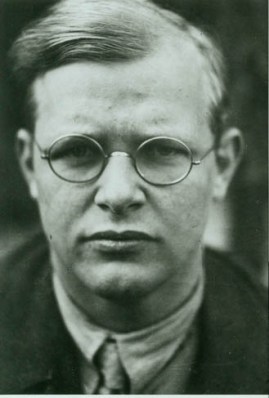
Dietrich Bonhoeffer

One such man was Dietrich Bonhoeffer, a brilliant theologian and humble pastor who wrote two of the great Christian classics of the twentieth century, The Cost of Discipleship and Life Together.

For Bonhoeffer, his faith was not just a private matter or limited only to the church. As he saw firsthand the horrors of Nazi Germany, he resolved to stop them and became involved in a plot to overthrow the government. The plot failed and Bonhoeffer was arrested. He eventually was martyred by Hitler, who imprisoned him in a German concentration camp and then hanged him.

Continue reading

The Great Commission

The Great Commission

The newly touted idea that “ekklesia” (the Greek word translated “church” in the New Testament) and the Great Commission are at odds is itself odd.

Jesus told His disciples:

“All authority in heaven and on earth has been given to me. Go therefore and make disciples of all nations, baptizing them in the name of the Father and of the Son and of the Holy Spirit, teaching them to observe all that I have commanded you. And behold, I am with you always, to the end of the age.” (Matt. 28:18-20 ESV)

The Great Commission applies, according to Jesus’ own words, through the “end of the age”. Any theology or view of “ekklesia” which ignores or somehow discounts that reality – out of reaction to real wrongs like man-centered discipleship or overwhelming external agendas that suck the life out of a church – is fundamentally flawed.

Continue reading

Does Jesus Want You to Vote?

I may be a citizen of the Kingdom of God, but the precinct where God has me live and vote is here in Virginia.

Because of my citizenship in Christ’s Kingdom…

Because the Lord rose triumphantly from the grave and declared that “all authority on heaven and earth has been given to me”…

And because of His concurrent command in Matt. 28 to therefore go transform all “nations” (the Greek word is “ethne”, which actually means cultures)…

I take the time to understand the issues and the candidates – and then vote.

Continue reading

Beyond Evangelical? (Part 3)

Post-Modernity

The “You Can’t” Crowd

What I find most bizarre among emerging “Beyond Evangelical” authors is how vocal they are in telling Christians what we can’t do – we can’t be engaged in cultural or civic reform, we can’t go and disciple the nations, we can’t be engaged in politics, we can’t ever take a social position that offends, we can’t this, and we can’t that.

Sometimes, it gets so bad that you can only laugh.

Continue reading

Beyond Evangelical? (Part 2)

Post-Modernity

History Repeats Itself

History demonstrates that a mainly subjective faith is a largely anemic faith, which increasingly becomes insular and irrelevant.

In the 19th century, an overly subjective focus within the Christian community in the West produced an existential form of pietism, which said that everything about anything came down to one thing: a personal relationship with Jesus.

In the 20th century, this came to a more extreme fruition in the existential theology of Karl Barth. Barth concluded that the Bible is not the Word of God, but rather only leads us to the person of Jesus. Furthermore, our subjective experience of Jesus is the only valid authoritative revelation of God’s word. As such, Barth rejected the plenary authority of Scripture as the written Word of God, and it’s role in providing external standards for judging the authenticity of our experience of Jesus.

Continue reading

Beyond Evangelical? (Part 1)

Post-Modernity

The spirit of this age – at least in the West – is post-modernity, which views reality as subjective and truth (if it even exists) as individual and relative.

It is not all bad, but neither is it Christ!

Steeped in a post-modern culture, Western Christians are increasingly re-defining Jesus through post-modern sensibilities that we’ve uncritically inherited from the world.

As a result, we focus on a personal, highly individualistic relationship with Him – which is often driven more by our own needs, our own hurts, and our own insecurities than by Jesus Himself.

Continue reading

We Have Met the Enemy

Losing Our Way

While killing time waiting for an Apple tech to look at my trouble-plagued iPhone, I browsed the racks at an adjacent bookstore.

There was a section for “Philosophy/Humor”.

That was bad enough to make me feel sorrow at our cultural malaise.

But then I saw the section “Faith/Self Help”.

Sigh …

Double sigh …

We have met the enemy, and it is us.

Herman Cain

Herman Cain

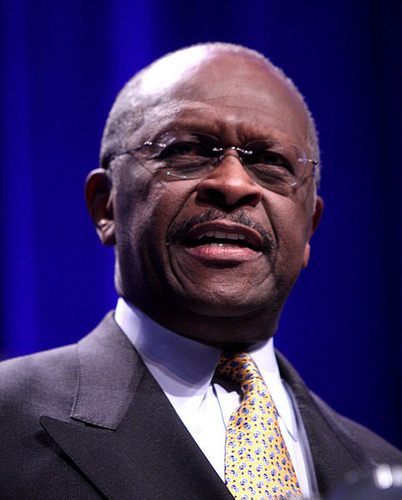
I’m a generally conservative Republican, so it pains me to see presidential candidate Herman Cain stumble. But even more so, I am appalled at the blogs and comments supporting Mr. Cain from folks who, I suspect, were on President Clinton like white on rice when allegations first surfaced about him.

Herman Cain

As Christians, we must speak truth to power, but with integrity and without applying double standards!

I’ve seen this same phenomena in pastoral sex abuse cases that I’ve handled. Folks will defend a pastor who – under the Biblical standard of two or three witnesses like we now have with Mr. Cain – is a confirmed sexual predator, simply because they like him or he helped them in the past. The fact is, sexual predators of all stripes are the most charming, charismatic, and capable people I’ve ever met!

Let me repeat that: Sexual predators are the MOST CHARMING, CHARISMATIC AND CAPABLE PEOPLE you, too, will ever meet.

Continue reading

Wall Street Protests

Wall Street Protests

On the one hand, I reject the anti-capitalist goals of the Occupy Wall Street protestors, and their implicit “entitlement” message. But on the other hand, I agree that the government – Democrats and Republicans alike – bailed out the rich and the privileged at the expense of every one else.

When the powerful become too big to fail, it only consolidates even more economic and social disparities and thus fosters injustice.

I think we as a nation need to look seriously at the principles inherent in the Year of Jubilee which God instituted with Israel under the old covenant.

If we took the underlying principle of giving society and everyone a fresh start every 49 years, how would we do it?

I wonder what that would look like today?

Mentoring Entrepreneurs

Here’s a TV program that’s been airing in our area about one of the ministries in which I’m involved. I, and others, have been mentoring and working with folks who are gifted with entrepreneurial aptitude. Our focus is helping them start and grow new businesses, based on solid, real-world experience and sound Biblical principles. Often, we work with “alumni” of the local jail.

The host, Liz Charity, starts out interviewing me, then does an on-site interview with one of my protegĂ©’s, Oscar Weeks, who started a road-side pit BBQ business.

Government Run Amuck

Government Run Amuck

S&P downgraded the United States last night.

I hope and pray that this will serve as a wake-up call for the Church to realize that Biblical precepts can’t be mocked if any nation wants to survive. If God’s people don’t begin to understand, articulate and follow those precepts, then there is no hope.

One of those precepts is that God has ordained certain roles and responsibilities for civil government, and Scripture has lots to say about how individuals, families, the Church, the State and voluntary associations are to function.

However, there is not a single verse or example in all of Scripture which lends any credence to the view that God has given civil government the right or responsibility to re-distribute wealth or provide for our individual health or income. See The Growing Idolatry of Civil Government.

Continue reading

Abusive Church Leaders (Part 4) – Civil and Criminal Law

Abusive Church Leaders (Part 4) – Civil and Criminal Law

So you’ve tried to follow the procedure of 1 Tim. 5, as discussed in Part 3 of this series, by investigating and exposing church leaders who abused their positions of power and trust.

But what if you were rebuffed?

Or what if – despite public reprimand, confession and repentance – you reasonably fear that they may continue preying on others or the church is not providing restitution for the harm you’ve been bearing? Scripturally, do you have additional options?

More specifically, is it ever proper to seek help from the courts and secular authorities to deal with pastoral sexual abuse or churches which allowed it to happen? After all, doesn’t 1 Cor. 6 say we should not sue another brother?

Continue reading

The Storm

The Storm

There is something in the prophetic personality that loves the thunder, the lightning and the storm.

I get a kick out of standing outside and watching the dark, billowing clouds roll in. We feel God’s majesty in turmoil, and know that He often uproots before He establishes.

I think we feel His mercy more deeply, but also differently. Because our personalities are especially attuned to His power and redemptive judgment, we more fully appreciate His grace.

That’s why we embrace the oppressed and battle tyrants, while relishing the storm.

~ Jim Wright

Scientific Faith

Whether or not you believe in the “Big Bang”, it is worth noting that it requires belief in an initial “singularity” of zero volume with infinite density and infinite energy. The dictates of the Big Bang theory, therefore, mandate faith in nothing which nonetheless contained everything.

Contemplation

Why is belief in something so impossible under current scientific laws acceptable, but belief in a God who is eternal and transcendent not acceptable to the neo-atheists – many of whom seemingly accept the Big Bang uncritically?

Such neo-atheists must rely on faith, having chosen to believe that:

No one plus nothing times blind chance = everything.

That requires more faith, it seems to me, than belief in an eternal God who created the universe.

Given the leap of faith required to accept the Big Bang theory, there is raging debate in the scientific world on whether our universe instead is simply the newest incarnation (or possibly an extension) of an eternal “multi-verse”. Some neo-atheists are now jumping on that bandwagon, as though it allows them to avoid the need for faith.

Continue reading

Freedom

In return for a little less freedom, civil government ever seeks to solve problems we should be solving on our own through individual responsibility, family support, personal charity or voluntary associations. As we’ve continued to trade liberty for government “solutions” (which never in reality actually solve much, but often make things worse), little by little we’ve become increasingly enslaved.

Every American should watch this cartoon from 1948 and heed its warning about Utopian promises to fix all of our problems. It is more relevant today than ever before.

May we once again find the courage, and the common sense, to stand tall as free men and free women.


For a related bog, take a look at The Growing Idolatry of Civil Government.