My last blog in this series mentions “Christocentric hermeneutics.” What is it, and why does it matter that some Christians now embrace it?
By way of introduction, “hermeneutic” is just a fancy word for how someone views, interprets and applies Scripture.
A “Christocentric” hermeneutic is an approach to Scripture that was popularized by existential theologian Karl Barth. It has gained popularity over the last thirty years among those who want to make Jesus and Scripture conform to their own sensibilities, rather than conform their sensibilities to Jesus and Scripture.
By “existential,” I mean a system of belief which says that what is true, real and right depends on our own personal perception.
(Whew. Sorry for that – but I’m often asked what those terms mean, so I thought we ought to get that out of the way right up front.)
So here is the core idea, when you cut through all the enticing rhetoric behind the Christocentric hermeneutic of Barth and his followers: They have problems with aspects of what Scripture says, so they claim “higher revelation” which supersedes and negates what they don’t like in Scripture.
Jesus vs. Scripture
In his multi-volume work, Church Dogmatics, Karl Barth reacted to the liberal critics of his day by trying to affirm Christ, but at the expense of Scripture. His central theological premise was that it doesn’t matter if Scripture is true, because Christ – as we subjectively perceive him – is the only real “Word of God.”
Although it is true that Jesus is God’s Word made flesh, Barth made the fundamental error of then saying that Scripture is not, therefore, also the Word of God (in written form).
Rather, the Bible is simply one of the ways we are “inspired” to experience Christ – which for him is the only true form of God’s “Word.” (Thus, Barthians today claim with a straight face that Scripture is “inspired,” but don’t mean it the same way most do.)
As Barth explained in his book, Church Dogmatics, “the Bible is not the Word of God, but a book like other books.”
Because Barthians believe their subjective perceptions of Jesus are “higher revelation” and more authoritative than Scripture itself, they re-interprete the Bible to conform to their new understanding of Christ. Anything in Scripture that does not relate to “Christ” – as they existentially perceive Him – must be discounted. (For more on this, see Karl Barth by John W. Robbins, in The Trinity Review, Feb. 1998.)
This is a neat logical trick that allows them to look like they are affirming the supremacy of Jesus, while leaving behind all the things that He says and reveals in Scripture – and that they happen to not otherwise like.
Barthians Today
What modern-day Barthians typically don’t like about Scripture, and frequently discount, are its claims of authority on things like propositional truth, morality, obeying external commands, the imperative of faith leading to good works, and certain aspects of God’s own nature (like His fierce holiness and sometimes harsh judgment).
Like Barth, they avoid those aspects of Scripture by elevating their own perception of Christ – which just so happens to conform to their own sensibilities – over Scripture.
By What Standard?
Is Jesus bigger than Scripture?
Yes, of course.
Aren’t we to have a vibrant, ongoing relationship with Jesus, and to hear the leading of the Holy Spirit as He speaks to our hearts?
Yes, of course.
But those are not the issue.
The issue is whether we have a vibrant relationship with the Living Word (i.e., Jesus as the Word made flesh), in submission to the discipline and authority of His written Word (i.e., Scripture)?
In other words, must we submit all of our doctrines, practices, beliefs, and existential perceptions to the plenary authority of Scripture as God’s written Word, in those areas where God has chosen to speak through Scripture?
You’d think that was very straightforward, but with Barthians, unfortunately it is not.
Beyond Folly
In my own circles, this has become a huge issue. Some leading voices in the simple or organic church community, like Frank Viola, Jon Zens and Milt Rodriquez, have explicitly dismissed the plenary authority of Scripture in various books and blogs – while nonetheless misleadingly claiming that they have a “high view” of the Bible.
For example, Frank Viola’s book, Jesus: A Theography, contains some good historical exegesis. But it also explicitly endorses (as Frank also does in his blog) the Christocentric hermeneutic of “the great theologian Karl Barth” regarding Scripture, and is dismissive of those who otherwise view the Bible as a source of “propositions” (i.e., assertions of truth) (pages xv and 350, fn. 37).
In his other book, Beyond Evangelical and also in his blog, Frank Viola fleshes out his views by saying he has no use for the “plenary authority” of Scripture. As he states, he agrees with “neo-evangelicals” who have “balked at certain affirmations of biblical authority… like ‘plenary'” (Kindle location 776).
The itinerant “workers” (the term Viola uses for what he believes to be “apostles,” including himself) he promotes go even further.
His colleague Jon Zens recently wrote the endorsing forward to a book which says that “Christians who believe that the Bible is the Word of God” are “Satan inspired” and have committed “treason against Christ” (which is the actual title of the book). See Treason Against Christ, Excerpts.
Other Viola “workers” and close associates also outright deny that Scripture is the Word of God. Milt Rodriquez and his protege Jamal Jivanjee even go so far as to call the Bible a “relic” and say that anyone who disagrees is a “legalist.”
According to Jivanhee and Rodriquez, the Bible (at best) merely contains the “words” of God – and, of course, they reserve the right to tell all the rest of us which of those words are, and are not, from God Himself. (See Illuminate, January 3, 2012, with comments.)
In fact, according to one blog by Jivanjee, those who dare question his views on scripture are an “ass.”
One of their cohorts and fellow authors, Marc Winter (Jon Zens is listed as one of his board members), even proclaimed that “the Scriptures are at great odds with The Truth” and that “Jesus has shown me the Bible is not the Word of God” (Facebook, February 25, 2013). He then stated most of Paul’s epistles needed to be excluded from the Bible because the “real problem with the pastorals is content” (Facebook, April 6, 2013).
Really?
The Word of God
Jesus is clearly the Word made flesh (John 1:1) and in two – but only two – passages is called “the Word of God” (Heb. 4:11-15; Rev. 19:13). But it is bizarre to claim that the Person of Jesus – and our existential perception of Him – is the only Word of God.
The teachings and good news proclaimed by Jesus, then taught by the Apostles and finally embodied in the New Testament, is called “the Word of God” in passages too numerous to list.
The Holy Spirit speaking to a person is called “the Word of God.” Prophetic utterances are called the “the Word of God.”
But more to the point, Jesus Himself – yes, red letter – calls Scripture “the Word of God” (see Matt. 15:1-9, Mark 7:1-13, John 10:31-36). Paul also calls Scripture “the Word of God” (Rom. 9:6).
Anyone who says that the Person of Jesus is the only expression of the Word of God is just Biblically naive. And anyone who uses that falsehood to deny that Scripture is the written Word of God is a deceptive wolf seeking to prey on God’s people.
All scripture is God’s very self-breathed Word and trumps any opinion, doctrine or practice to the contrary. Really, this is so complicated? See 2 Tim. 3:16-17.
A Fractured Jesus
For proponents of a Christocentric hermeneutic, Scripture has validity only to the extent it inspires us to embrace their limited, existential view (or what they sometimes call “story”) of Jesus. Thus, they discount any role for Scripture which does not point to their concept of Jesus.
In essence, they create Jesus in their own image. And guess what? Their existential Jesus happens to look just like them – and affirms their own sensibilities.
They end up with a fractured Jesus by divorcing Jesus as “the Word” from His own written Word of Scripture – and often dismiss what the Bible says about His full nature, creation, truth, reality, morality, history, obedience, how we should live, and so much more.
As T. Austin Sparks, the spiritual guru of the Beyond Evangelical folk, once explained: “The Bible, if we knew it right, is not a book at all. It is a Person. It is not a collection of truth and doctrines, laws, commandments, and techniques. It is just a Person …”
To varying degrees, the Great Commission, cultural engagement, evangelism, morality, Biblical commands and all else found in Scripture are, for them, “distractions from Christ” and their “higher revelation.”
Their Christocentric hermeneutic has become an insidious doctrine that tickles the ears of many by claiming to elevate Christ, while robbing His people of the dynamic power of all that Christ reveals in Scripture.
Biblical Diversity
I want to be clear: By challenging the “Christocentric hermeneutic” of the Beyond crowd, I am NOT pushing any particular system of theology or interpretation. I deeply respect the authority of each community of believers (ekklesia) to interpret and apply Scripture in the context of their own circumstances.
If you read my blogs, I generally have avoided the so-called theological debates of the day. Instead, I generally focus on foundational issues needed for healthy believers and fellowships to emerge, and thus authentically express Christ – including His written Word of Scripture – in us, among us and through us.
One of those foundational issues is affirming the role of Scripture as God’s authoritative written Word – rather than pushing some theological interpretation of Scripture.
Another foundational issue is that Jesus expresses Himself through a diversity of gifts, callings and motivations.
In healthy fellowships, we will see things differently when looking at this or that passage of scripture. That’s good!
Also, how Scripture is applied by a fellowship living in the context of my culture will not look the same as a fellowship in another culture – or even down the street. That too is good!
There is both a culture transformation that comes from Scripture, yet also a cultural “living out” of Scripture. Only a fool emphasizes one to the exclusion of the other.
Likewise with individuals: When it comes to Scripture, I will see a passage one way based on the inherent motivations and perspectives that come with my own God-given gifts. You may see it another way based on your different gifts.
As such, my spiritual antenna will pick up different frequencies – even from Scripture – than yours.
Thus, we need each other, and enrich each other, as we each see different things in Scripture and help each other gain a fuller understanding of Scripture.
Common Ground
But if we don’t accept the core authority of Scripture over our personal experiences and perceptions of Christ, what’s the use of our different perspectives?
We all need vibrant, personal, living relationship with Jesus.
But if we stop there, we become trapped in the quagmire of each person asserting the autonomy of our own relationship, concepts and perceptions against everyone else.
In the name of the Word made flesh, we end up rejecting His external Word of Scripture – and the transforming truths of His own authoritative, written revelation.
Is it any wonder, then, that those who espouse a “Christocentric hermenuetic” typically are not able to actually create or function in healthy fellowship? Or that those churches which try to follow their doctrines often end badly, or else become weak and anemic if they survive at all?
Existential Hypocrisy
Generally those who want to elevate their own existential concepts of Christ over Scripture have not shown much success in committing to – or forming – healthy, sustainable fellowships.
For example, Frank Viola has confirmed to me – as have others down in Gainesville, Florida, where he lives – that he’s not been part of a local fellowship for many years. Yet he keeps cranking out blogs telling others how to be the church and how to function together as churches.
Nor has he succeeded in his self-proclaimed role as an apostolic “worker.” (Although he now says he disclaims that role, he still maintains a web site which solicits invitations for him, Rodiquez, Zens and others to come help your church as an “itinerant church worker.”)
These issues are not unique to Frank Viola. If you check out many of those who claim to be “church planters” and “workers” in the organic church community, you will find the same.
Existential Failings
An existential Jesus created in our own image to appease our own sensibilities, who we then elevate over His own written Word of Scripture, makes sustained, healthy fellowship nearly impossible.
At best, under the existential theology of Karl Barth and his Christocentric hermeneutic, each person is autonomous as they ultimately do what is right in their own eyes.
At worst, each person falls into the bondage of some “apostolic worker’s” own, limited and often self-serving concept of Christ and His church – which has been the great failing of Viola, Rodriquez and their “Beyond” colleagues.
The influence, then, of those who follow the Christocentric hermeneutic of Karl Barth comes more from their books and blogs than from actually reproducing sustainable churches. But their books and blogs create just the opposite impression – and falsely so.
Moving Beyond “Beyond”
As noted by church historian Carl R. Trueman: “Look, if I wanted a pretentious and incomprehensibly abstract theology with an impeccable record of emptying churches, I’d convert to Barthianism, wouldn’t I?”
Friends, let’s be wise and not follow the Pied Pipers of Barthian theology over their existential cliff.
~ Jim
Addendum
Karl Barth’s writings are very dense and often seem contradictory. As a graduate student at Westminster Theological Seminary, I had to extensively study his theology – often at growing dismay.
For those wanting to delve deeper into Barth, the book Karl Barth’s Theological Method by Gordon H. Clark is generally considered the best scholarly critique available. The forward to that book provides an excellent summary of his theology and life, and is available online.
Another good summary of his views is the 1934 Barmen Declaration, which he helped frame. Although the Declaration had noble aims, Barth states that:
Jesus Christ, as he is testified to us in Holy Scripture, is the one Word of God which we have to hear and which we have to trust and obey in life and death.
We reject the false doctrine that the Church may and must acknowledge as sources of its proclamation other events, powers, forms and truths as God’s revelation beside this one Word of God. (Emphasis added.)
In essence, he’s saying that only Jesus is the Word of God, and rejects anything beyond the Person of Jesus – including Scripture itself – as independent revelation. As noted in one treatise on Barth, “He viewed the Bible… not as the actual revelation of God but as only the record of that revelation. God’s single revelation occurred in Jesus Christ.” See Boston University’s Encyclopedia on Western Theology, on Karl Barth.
Frank Viola openly affirms that the primary purpose of his book Theography is to promote and “rediscover” Barth’s “Christocentric hermenutic”. See Mike Morrell Interviews Leonard Sweet & Me. In fact, he says that Barth’s “Christological approach to the Scriptures [is] a keynote of my entire ministry.” See The Bible Made Impossible: Interview with Christian Smith.
Along those lines, Frank Viola also endorses “neo-orthodoxy,” which he acknowledges is a system of theology that “Karl Barth [also] held to”. See Blogging Through Bonhoeffer: Part VIII.
Neo-orthodoxy is a theology that “is known for its existential element which stresses the subjective experience of the individual and regards propositional truth as either irrelevant or indeterminate.” Furthermore, neo-orthodoxy says “it is a mistake to directly identify Scripture as the Word of God; Jesus, the person, is the Word of God… Therefore, the actual text and words of Scripture are not identified as the Word of God.” See Theopedia on Neo Orthodoxy.
Although Frank Viola uses different terminology, and in the face of criticism has allowed that the Bible also is the “word of God” (unlike his colleagues Rodriquez and Zens), he nonetheless believes it is has “full authority” – but only to the extent it affirms his existential, “deeper life” perception of Jesus. Otherwise, according to him, the Bible carries no particular accuracy or overall “plenary authority”. See Beyond Evangelical: Part V and 20 Reasons Why the Christian Right & the Christian Left Won’t Adopt Me.
Related articles
 Everyone loves justice, until it disturbs their comfort zones.




 This is a widespread problem, involving leaders in the church who use their position of trust to sexually prey upon men and women seeking their help.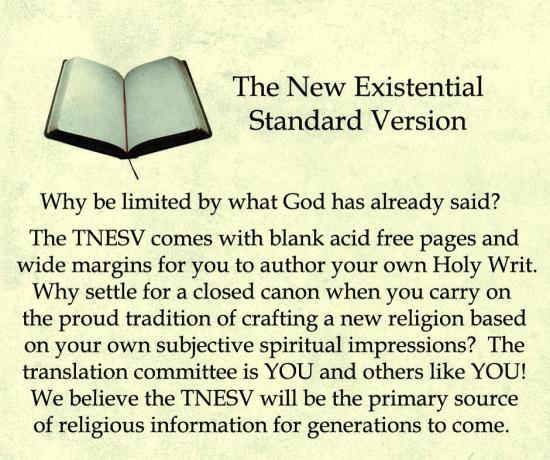


 … while there are too few spiritual moms and dads, quietly laboring without name or fame in committed local fellowships to build strong believers.
 He had been struggling with emotional pain and bondage, and said he hadn’t come earlier because he didn’t want to be a burden.
 Frank Viola, Milt Rodriguez, Jon Zens and Felicity Dale?


 Crossroad Junction