Love in Action

You tell me how in Christ love is everything.

How it transcends morality, truth and even scripture itself…

How if we just expressed your concept of love, the world will beat a path to Jesus…

Yet you recoil at basic truth, like the reality of sin and moral precepts.

And you reject much that God has revealed in His Word to help us understand His own nature and thus the parameters of authentic love – for the good not just of individuals, but whole societies.

Somehow, you have been deceived into thinking that authentic love is freedom from truth, when actually it is truth set free.

Continue reading

I Confess: I Ate at Chick-fil-A

It hasn’t taken long for the Christian postmodernists among us to start accusing their brothers and sisters in the Lord of bigotry, intolerance and hate simply for eating yesterday at Chick-fil-A.

In the last 24 hours, I’ve seen several blogs and related Facebook comments along those lines.

My Favorite Chick-fil-A Meal

Really? Bigotry, intolerance and hate? I saw no evidence of that yesterday.

Have some become so trapped in their postmodern sensibilities that it now is wrong to stand up in a civil, respectful manner against those who want to use the power of government to silence a man of faith – and block his businesses?

And his “sin”?

Simply this: Affirming his personal support of marriage as God has ordained it in His written Word, while nonetheless being open and embracing of all who patronize his establishments regardless of their sexual orientation or differing views.

Let’s get a grip, folks.

Continue reading

I Want More Religion (Part 3)

I figure that if half of the folks reading my blog say “amen!”, and the other half say “oh my!”, then I’m right where God wants me.

The Whole Picture

The consternation and angst – in blogs, Facebook comments, podcasts and the like – generated by this series have convinced me that what I said needed saying.

My point is simple, and 100% Biblical:

I go, do and obey because of who I am in Christ. It is His life in me, expressed through me.

But here’s the kicker: If I do not “do”or obey as Christ commands, then the life of Christ in me is a lie – at least in those areas where I choose to disobey or stay trapped in my own sensibilities.

Continue reading

Glorious, Messy Reality

Danger, Danger, Danger: Are you someone who is adamant about Jesus and fellowship needing to reflect your own theories and sensibilities, yet are not yourself in functional ekklesia (the Greek word used in the New Testament for “church”)?

The wonderful, multifaceted Body of Christ

By ekklesia, I’m not talking about your traditional Sunday-go-to-meeting “church” with it’s hour of worship-band sing along, directed prayer and monologue sermon. Nor am I talking about posting on Facebook.

Rather, I mean authentic, flesh-and-blood community which finds expression as the multifaceted, multi-gifted Body of Christ – including dynamic, diverse and participatory fellowship gatherings.

Because I am very, very careful not to spout off pet theories divorced from reality, I try to keep my blog rooted in such fellowship. There’s enough naive, aspirational gibberish in the blogsphere these days, and practical reality seems to be sorely lacking.

Continue reading

Finding Freedom From Life’s Hurts

Finding Freedom From Life’s Hurts

This is a fifty-five minute teaching I shared with about thirty men, based on hundreds of pastoral counseling sessions where God showed up and brought freedom and healing from deep hurts – including abuse, abandonment and so much more.

My blog is a feeble attempt to upload a lifetime of service to the King of Kings. I believe this audio teaching, however, captures better than anything I’ve written some of the most significant things I’ve learned as I’ve walked with folks to those ugly places of bondage and hurt in their lives. When we get there, and they exposed their hurts and lies to the Lord, He brings His loving, healing truth.

In this talk, I also share some of my own very personal story about my own places of hurt, which I had to expose to Lord so He could then bring wholeness to me.

You may think you know me from my writings, but this captures my heart in ways that a written blog never can.

 
If this resonates with you, I also recommend my related blog, God Shows Up.

Ekklesia: A Modest Manifesto

Ekklesia: A Modest Manifesto

Wherever he went, the Apostle Paul always sparked either revival or riot.

Does our age, and our culture, deserve any less?

Let’s boldly smash our boxes of insular spirituality and cultural lethargy by confidently proclaiming that Jesus is Lord of all.

Let’s reject narcissist Christianity by allowing Jesus in me to be more than about me – and my sensibilities.

Let’s stop foisting our own grace, gifts, callings and motivations on God’s people as normative for all.

Let’s embrace the diversity of His grace, gifts, callings and motivations in the context of true ekklesia – local authentic community where Jesus in us is expressed through us as His multifaceted and participatory Body.

Let’s stop saying everything is about my relationship with Jesus while discounting his Kingship – including His commands and His precepts.

Let’s stop saying I only do what I hear Jesus subjectively tell me, while denying the power and authority of what He also says in His written Word.

Let’s stop proclaiming “Christ is all” while minimizing all that Christ has given for knowing more of Him – including not only His presence in us, but also the plenary authority of Scripture to guide us in sound doctrine, balanced community that affirms objective standards, holy lives that please Him, engaging our culture, and wise counsel from mature believers who model His precepts.

Let’s reject gnostic tendencies that seek to separate the spiritual and the material world of our everyday existence by denying the authority and relevance of Christ – and His body – regarding all of creation.

Let’s stop discounting those who went before us, and their creeds and experiences, by humbly learning what they have to teach us despite the reality that we all have flaws.

Let’s affirm God’s continual sovereign advance through history and reject the spirit of our age and its myopic, isolationist pessimism.

Let’s be discerning about self-proclaimed apostles, prophets, evangelists, teachers or other itinerant ministries – and their writings – when they are not themselves presently rooted in, accountable to, coming from, or even able to demonstrate a history of integration into actual, functional, local ekklesia.

Let’s reject the voices of those who try to separate the centrality of Christ from the Great Commission, mission and discipleship.

Let’s unleash God’s people to be fruitful at all stages of their growth, as Christ enables, and stop burdening them with the bondage of our preconceived preconditions of “root before fruit”.

Let’s start embracing balance and maturity – as together we become His disciples through functional, participatory ekklesia that reflects the life of Christ but is also rooted in the authority of His written Word.

Let’s be mighty men and women of God, who once again spark revival or riot as we proclaim the fulness of Christ as merciful Savior, gracious Lord, sovereign King and ultimate Judge to a desperate world.

As such, may we be life-transforming, culture-changing ekklesia once again – the visible Body of Christ which doesn’t merely say come, but goes forth into all the world.


I wrote and posted this on the morning of my birthday, when I officially became a “senior citizen”. It summarizes a lifetime of experience serving the King of Kings. May it be both a present and a challenge to my passion: the wonderful, multifaceted, participatory Body of Christ.

Eating of the Tree of Life? Watch Out!

A strange new doctrine has emerged over the last decade to support the old dualism of everything being about my personal, subjective relationship with Jesus – to the exclusion of any transcendent, objective moral code or (in some extreme cases) even Scripture itself.

Choosing Moral Autonomy

The new doctrine goes like this:

God wanted us to eat of the Tree of Life in the Garden of Eden. Adam and Eve, however, rebelled and chose instead to eat of the Tree of the Knowledge of Good and Evil. The Tree of Life, they say, is Jesus (which I think is questionable, given that Jesus walked with Adam in the cool of the day and obviously was not a tree, but that’s not my point).

This new doctrine goes on to say that we should only want the subjective, relational attributes of Jesus and not let any objective concept of what is true, real and right get in the way. This is because, they say, the Tree of the Knowledge of Good and Evil represents things like morality, objective standards, Scripture, commandments (again, this is of dubious exegesis, but again, that’s not my point), and anything else that may contradict their feeling-driven experience of Jesus .

Like all great errors in Church history, this one has enough truth to be tempting. But truth out of context is deadly.

Continue reading

“Beyond Evangelical” by Frank Viola: A Review

“Beyond Evangelical” by Frank Viola: A Review

I just finished reading, from cover to cover, Frank Viola’s new book “Beyond Evangelical”.

Although it largely consists of re-prints of his prior blogs, it has lots of good stuff … so long as you take it in context.

That context is a repeated emphasis by Frank on an way of relating to Jesus and the world which is sometimes called Christian existentialism, which is hardly surprising given his repeated praise in his blog of existentialist theologian Karl Barth. That existentialism seems to be rooted in the belief that all externals (social problems, cultural problems, family problems, church problems, etc.) will be resolved as we internally connect with the person of Jesus. When we do this collectively as “ekklesia” (the Greek word translated “church”), we then fulfill God’s “grand epic”.

Although this sounds good, most problems throughout church history come from truth out of balance. Presumably, anything outside of Frank’s understanding of who Jesus is, and what Jesus is about, is a distraction. (See my prior blog series, Beyond Evangelical?) Frank Viola nonetheless goes to great length justifying his existentialism by proclaiming the truth that “Christ is all”, but then makes the mistake of interpreting that truth in ways which limit Christ and thus lead to a new legalism.

Beyond Evangelical, by Frank Viola

Whereas the old legalism, which he does a good job of picking apart, was all about “doing” and “not doing”, the new legalism is all about telling folks what Jesus should look like in us, and thus who we can “be” and “not be” in Christ. Along those lines, his book is an apologetic for how Christ from his “beyond” perspective should be the new norm, combined with a polemic against how Christ is expressed in others.

As I’ve noted before, however, the “all” in Frank Viola’s “Christ is all” looks and feels to many of us who’ve been around longer than Frank to be little more than a narrow set of sensibilities that are essentially millennial and post-modern in attitude. This is in contrast to the differing concept others of us embrace – of a multi-generational, multi-graced, multi-called and multi-gifted Body of Christ that includes all “tribes” (to use Frank’s term).

I’ve said it before, and it bears repeating: I am not beyond any other segment of the Body of Christ. I have yet to meet a brother or sister in Christ who can’t teach me something of Christ, because something of Jesus is expressed in all of us. I have something of Christ to offer you, and you have something of Christ to offer me. That, in a nutshell, is the Body of Christ in all of its multifaceted glory.

This book, at its heart, is Frank Viola’s apologetic defense of his “beyond” tribe as against all other flavors of evangelicalism. Rather than seeing the strengths of other tribes and how they have much to teach and add to his “beyond” tribe’s own grace, gifts and calling, he keeps talking in very general terms about how his “tribe” is beyond them.

He does this by putting folks into very artificial categories – often with somewhat inaccurate characterizations, sometimes grossly distorted histories (the errors of which I can personally attest to based on my own direct involvement) , and repeated warnings about all the problems found among other classes of Christians. Yet those other believers who he keeps characterizing in unflattering ways (yet with a measure of charm) candidly look nothing like any fellow believers I know.

In essence, Frank Viola puts everyone into categories to contrast the rest of the Body of Christ with his own tribe – while also paradoxically going out of his way to say we should be beyond categories.

For example, I kept reading his descriptions of all those bad “fundamentalists” and “Religious Right” boogie men – with stereotypes that seemed to be lifted more from the editorial pages of the militantly secular NY Times or the diatribes of MSNBC talk show host Rachel Maddow than from any real fellowship with real brothers and sisters in Christ – and just shook my head over and over as I kept trying in vain to think of anyone I actually know who actually fit his prejudicial caricatures.

But hey, let’s not let real brothers and sisters in Christ – with real lives – get in the way of a good narrative on how my group is “beyond” everyone else. Right?

My point is not to defend those who he disparages – they can defend themselves. Rather, it is to call him to task for his polite yet nonetheless divisive, sectarian and dismissive rhetoric, while he repeatedly decries others who are divisive, sectarian and dismissive towards him.

In pointing out all the flaws of others – in a very charming and nice way, which I couldn’t help but admire – Frank Viola then fails to give a single real life or practical example of how his “beyond” approach would look or do things differently. Again, there is not one concrete, real world, real life example in the entire book. None, nada, zip. It is simply a litany of aspirational platitude after aspirational platitude – some good, some naive, and some certainly open to a more balanced, inclusive perspective.

“Beyond Evangelical”, like much of Frank’s blog by the same name, legitimately raises valid questions. I agree with him on the need to move from isolated individualism to a more comprehensive expression of “ekklesia”. I commend him for that, although I have a broader view of Christ and His Body than the existential theology my “Beyond” brethren might allow. Nonetheless, this critique of his book comes from the perspective of “ekklesia” – as my life is devoted to finding, experiencing and working out what ekklesia looks like with an active and diverse community of fellow believers here in Virginia.

Yes, Christ is all, but our “all” looks a lot bigger in our fellowships than Frank Viola’s “all”.

Otherwise, from a purely aspirational point of view there is not much to dislike in Frank’s book. But if you are looking for substance and – like me – looking for him to articulate clear alternatives beyond his platitudes and his contrasting negative stereotypes, then you will be left hanging.

It is the easiest thing in the world to point out the splinters in everyone else, but to not see the log in one’s own eye.

In my experience, there are some big log’s in the eyes of the “Beyond” tribe. My challenge to Frank Viola is to prove me wrong: Give us examples. Surely, after all these years of touting what I see as a somewhat myopic existential view of what “Christ is all” means, he can start to point to examples of how real people are doing real things to express his “beyond” platitudes in the real world – beyond their own individual faith and beyond what strikes many of us as their insular fellowships and tendencies toward a rather insular faith. Both his blog, and this book, utterly fail to do so.

Rather than build relationships between various parts of the Body of Christ as we learn to esteem one another above ourselves, my overall concern continues to be that Frank feeds the growing alienation of his tribe from the broader Body of Christ. Of course, in the book he denies this, but it’s there and is a glaring blind spot nonetheless.

I think the ultimate criteria for evaluating “Beyond Evangelical” is this: After reading the book, would a typical millennial Christian (according to Frank, this is his primary focused audience) – who may be steeped in post-modern sensibilities and feel alienated – be more likely to seek out and press into a multifaceted, multi-generational and multi-“tribe” expression of Body of Christ, or less likely?

Some may disagree with my specific critique of the book, but that bottom line question fairly well sums up all of my concerns.

I believe Frank Viola still has much to offer the rest of us so long as he grows beyond the stark limitations of his Karl Barth Christian existentialism and its associated post-modern sensibilities. But I fear, instead, that this book will only reinforce the trend within Frank’s “beyond” tribe to remain mired in its millennial post-modern sensibilities by dismissing much that the rest of the Body of Christ has to offer them.


Fathers and Teachers

Fathers and Teachers

I keep hearing from folks who have felt troubled and marginalized by authors and bloggers who seem unable to go beyond their own sensibilities and who seek to make their own gifts and limitations normative for the entire Body of Christ.

In response, I can’t shake this urge to proclaim what I see in scripture and experience daily in our own fellowships: The multifaceted, multi-gifted, multi-called Body of Christ.

I am convinced that God’s heart is passionate about releasing His people to be all that He created them to be – not just in our churches, but in all spheres of life.

Our collective failure to do this – both within the institutional and organic church communities – and the insular, anemic fruit that has resulted, is one of the biggest challenges facing the West today.

Individual Limitations

Here’s the problem I see daily among individual Christians:

Those who are primarily motivated by the heart, feel all must be the same. Those primarily motivated by renewed minds, think all must be the same. Those primarily motivated by transformed wills, act as though all must be the same…

We are post-modern in our sensibilities, so all must be the same. We are called to this, or to that, and so all must be the same. We not are called to this, or to that, and so all must be the same…

Please, everyone, can’t we just stop this nonsense!

Yes, Christ is all. But is He just Lord of YOUR all, or Lord of all?

Is He just heart, or just mind, or just will?

Is He just mercy, or just prophetic, or just ruler, or just giver, or just relational, or just whatever you want or seem to need Him to be?

Is He just generation X, or generation Y?

And let’s get down to the nitty-gritty: Has He really surrendered His Lordship over all creation, culture, spheres of human endeavor, nations and history itself, just so He can be all about you and your sensibilities?

For real???

Leadership Limitations

It is bad enough when individuals try to make their own strengths and limitations normative for all. But it is an order of magnitude worse for a leader to do so.

Fathers delight in others exceeding them.

The more I contemplate and reflect on this, and seek the mind of Christ, the more I am coming to believe that these problems are rooted in the difference between a teacher verses a father in the faith.

Both are needed.

But teachers are primarily motivated to reproduce what they have only personally comprehended or experienced. They tend to minister from whom they are, and are very good at laying a foundation based on what they personally understand, but often are not very good at taking us much further.

Fathers (and mothers!) often stand on the foundation laid by the teachers, and may themselves engage in didactic teaching, but their motivation is very different. They tend to focus on who you can be, and are good at helping others be more than themselves and to exceed their own understanding and experiences.

Where teachers delight in replicating what they have personally figured out, fathers delight in us going beyond their own abilities, comprehension, biases and sensibilities.

Now, don’t get me wrong. This is not an absolute either/or. But there are different core motivations, even though some can operate in both arenas.

Maybe a hands-on father in the faith won’t be motivated to burrow down into all the details to bring us deep understanding on this or that – or be motivated to write many books – like a teacher. Rather, his greatest joy is releasing others to be more than himself.

The joy of a father is for you to exceed him by helping you find your own – and often very different – abilities and calling. He delights in watching you conquer the unknown as you venture into new spheres of endeavor in areas he may not even comprehend, rather than simply conveying and replicating his own motivations and understanding.

Moving Forward

We have wonderful teachers, writers and bloggers, and they have taught us much from the perspective of their own journey, their own comprehension, and their own sensibilities.

But we have too few fathers in the Body of Christ these days.

As a father who has birthed and mentored many in the Lord, I make this plea to the gifted teachers among us who have taught me much: Keep writing, blogging and teaching. You have much to offer. But understand that Christ, as head of His body, never intended for your own understanding and experiences to become limiting factors, or God forbid, the new legalism.

He calls all leaders in His Church to enable and equip others. And yes, Christ is all. But “all” is not defined by or limited to your own understanding and sensibilities.

Unless we all grasp this truth – individuals, teachers and fathers alike – we will never become the wonderful, amazing Body of Christ.

This is my passion. This is my calling.

The Transformational Power of the Cross

Yesterday was the 123rd anniversary of Hitler’s birth. The fact that we do not celebrate his birth or the evil he did is a testimony to those who gave their lives to stop him.

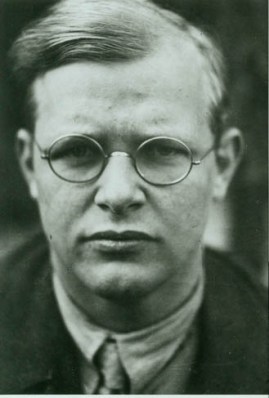
Dietrich Bonhoeffer

One such man was Dietrich Bonhoeffer, a brilliant theologian and humble pastor who wrote two of the great Christian classics of the twentieth century, The Cost of Discipleship and Life Together.

For Bonhoeffer, his faith was not just a private matter or limited only to the church. As he saw firsthand the horrors of Nazi Germany, he resolved to stop them and became involved in a plot to overthrow the government. The plot failed and Bonhoeffer was arrested. He eventually was martyred by Hitler, who imprisoned him in a German concentration camp and then hanged him.

Continue reading

Twitter and Facebook

Twitter and Facebook

Sometimes on Twitter, I just chill:

“Grace, love and mercy are all great, but please, don’t expect too much before I’ve had my morning cup of coffee!”

Other times, I get can’t help it and revert back to my professor days:

“Lord save the West of self-absorbed religion, mired in pietistic post-modern sensibilities, masquerading as Jesus-focused Christianity.”

(Oops. Did I really say that? It just sort of slipped out in an unguarded moment. Me bad!)

Another recent tweet, from my church planting perspective, generated lots of great discussion when re-posted on Facebook:

“Raised country and learned that crap is the best fertilizer. As Jesus brings life from crap, u won’t need no artificial church growth junk.”

(BTW, the crap I’m referring to is the mess in folks lives.)

I love writing this blog, but I also like the more dynamic and interactive environment of Twitter and Facebook.

So how about also connecting on Twitter (OrganicSower) and Facebook (http://www.facebook.com/wright.jim)?

I’ve also added to a new page of recent tweets on my blog, Crossroad Junction.

Join the discussion!

Modern Day Pauls?

masks

Many tout themselves as apostles and modern-day church planters like Paul, but where’s their Antioch?

Although Paul functioned as an apostolic church planter, his self-expressed credentials included the fact that he continued as an elder – meaning he remained grounded in and part of the local leadership of his home church in Antioch.

All too often we ignore the fact that Paul went on his apostolic missions only after being commissioned and sent by his local church, and that happened only after he’d proven himself over many years in the context of a local, functioning fellowship.

At the end of his various journeys to help start and encourage other churches (except for his last, where history says he was beheaded in Rome), he would then return for a season to his home church in Antioch before being sent out again.

In contrast to Paul, be wary of gifted but itinerant men and women who want to “help” you form or succeed as a local church – through their books, blogs, podcasts, seminars and requests to visit you – yet lack ongoing community with, roots in, commission from, and accountability to another functioning local church.

Some of us have been around long enough to see past incarnations of such floating, unattached “ministries” to local churches.

In the 70’s and 80’s, they proliferated within the Charismatic movement – mainly among those who were certainly gifted but nonetheless could never succeed at finding healthy church with accountable community in their own lives.

Often, they were authors or good aspirational communicators who had exciting ideas, but only answered to themselves.

Sometimes, however, they’d form loose associations where they purportedly answered to each other in lieu of having any Antiochs in their lives – which only tended to reinforce the shared theological and personal idiosyncrasies which attracted them to each other in the first place.

More recently, we saw it in the “organic church” movement, as itinerant “workers” (their euphemism for “apostles”) wreaked havoc on countless house churches. Almost none of those assemblies survived.

Without exception, over time problems emerged with each and every of those so-called apostles and “church planters” – and with the churches that listened to them. (And I mean that – I can’t think of a single one who did not fall prey to one disqualifying problem or another, often related to pride or just becoming increasingly weird!)

There’s too much of this stuff starting to emerge again today, especially among those wanting to be the church one with another. 

Those who promote themselves, their services, and their agendas without living it and having made it first work – with accountable and sustainable results – in their own lives and hometowns are fraught with danger.

Ignore their lack of grounding in an actual, functional church like they promote to others, and you too will reap disaster.

~ Jim Wright

The Great Commission

The Great Commission

The newly touted idea that “ekklesia” (the Greek word translated “church” in the New Testament) and the Great Commission are at odds is itself odd.

Jesus told His disciples:

“All authority in heaven and on earth has been given to me. Go therefore and make disciples of all nations, baptizing them in the name of the Father and of the Son and of the Holy Spirit, teaching them to observe all that I have commanded you. And behold, I am with you always, to the end of the age.” (Matt. 28:18-20 ESV)

The Great Commission applies, according to Jesus’ own words, through the “end of the age”. Any theology or view of “ekklesia” which ignores or somehow discounts that reality – out of reaction to real wrongs like man-centered discipleship or overwhelming external agendas that suck the life out of a church – is fundamentally flawed.

Continue reading

Celebrating 100 Years of Twisting, Licking and Dunking

Celebrating 100 Years of Twisting, Licking and Dunking

Today is the 100th birthday for Oreo cookies.

I LOVE Oreo cookies! They are proof that God loves us and has a wonderful plan for our lives.

Enjoying an Oreo cookie also theologically demolishes all arguments one may muster in support of a pessimistic, doom and gloom eschatology. Ah, the joy! 

But enough theology …

The great thing about Oreos is that they single-handedly satisfy the FDA’s recommended daily requirements for three of the four essential food groups.

Those four essential food groups are sugar, lard, chocolate and caffeine. To achieve a balanced diet, though, I often have a mug of hot coffee with my Oreos.

I once made the mistake of mentioning our four American food groups to a friend from Canada. He seemed surprised, and said he thought the four major food groups in the U.S. were fast, fried, deep fried and refried.

I told him that was only true in the deep south. In Virginia, by God, we may be south of the Mason-Dixon line, but we’ve managed to hold onto some remnants of high culture!

I must confess, however, that strawberry “fig” newtons are my other weakness. At least they provide some pretense of being healthy (applying snobbish standards), since they contain fruit (that red goo is real fruit, right? – if not, don’t tell me and destroy my ignorant bliss).

Anyway, happy 100th birthday.

Now where did I put my box of Oreos …

~ Jim Wright

Beyond Evangelical? (Part 3)

Post-Modernity

The “You Can’t” Crowd

What I find most bizarre among emerging “Beyond Evangelical” authors is how vocal they are in telling Christians what we can’t do – we can’t be engaged in cultural or civic reform, we can’t go and disciple the nations, we can’t be engaged in politics, we can’t ever take a social position that offends, we can’t this, and we can’t that.

Sometimes, it gets so bad that you can only laugh.

Continue reading

Beyond Evangelical? (Part 2)

Post-Modernity

History Repeats Itself

History demonstrates that a mainly subjective faith is a largely anemic faith, which increasingly becomes insular and irrelevant.

In the 19th century, an overly subjective focus within the Christian community in the West produced an existential form of pietism, which said that everything about anything came down to one thing: a personal relationship with Jesus.

In the 20th century, this came to a more extreme fruition in the existential theology of Karl Barth. Barth concluded that the Bible is not the Word of God, but rather only leads us to the person of Jesus. Furthermore, our subjective experience of Jesus is the only valid authoritative revelation of God’s word. As such, Barth rejected the plenary authority of Scripture as the written Word of God, and it’s role in providing external standards for judging the authenticity of our experience of Jesus.

Continue reading

Beyond Evangelical? (Part 1)

Post-Modernity

The spirit of this age – at least in the West – is post-modernity, which views reality as subjective and truth (if it even exists) as individual and relative.

It is not all bad, but neither is it Christ!

Steeped in a post-modern culture, Western Christians are increasingly re-defining Jesus through post-modern sensibilities that we’ve uncritically inherited from the world.

As a result, we focus on a personal, highly individualistic relationship with Him – which is often driven more by our own needs, our own hurts, and our own insecurities than by Jesus Himself.

Continue reading

A Multilingual Jesus

A Multilingual Jesus

God speaks to some subjectively, and to others objectively, and each often forgets that Jesus is multilingual. Regardless, His subjective love is rooted in objective truth, and He never limits Himself to just one or the other.

When we become so focused on one, to the exclusion of the other, we are not really relating to a complete Jesus. Rather, we often are seeking self affirmation – a Jesus who simply relates to us on our own terms and within the confines of our own comfort zones.


We need each other in the context of the whole Body of Christ if we truly want Jesus as our wonderful and multifaceted Lord and savior – who then transcends our individual limitations.

As I work with fellowships and minister to individuals, I see that an overly subjective perspective (or, if you prefer, “heart” and feelings) eventually becomes mired in unhealthy sentimentality.

Those, however, who are overly objective (“mind” and logic) eventually become mired in a dry impersonality.

When we together find both the subjective and the objective Jesus, however, we find mature health.

Different Spiritual Languages

Each of us will naturally tend to speak in our own God-given spiritual language of the heart or of the mind, and that’s as it should be. But we nonetheless need each other.

In my own life, God has given me a wonderful wife who relates to God very subjectively. He speaks to her through feelings, while I, on the other hand, hear God very logically and rationally.

When we started dating, we almost didn’t make it because I thought my spiritual language was superior to her’s. I kept insisting that she communicate with me about the Lord in my own language.

She, in turn, couldn’t understand that relating to Jesus through my logic and reason, and my need to figure things out, was just as intensely personal and intimate as her way – even though it was very different.

Where she primarily felt the subjective heart of Jesus, I primarily pursued the objective wonder of Jesus – with very different spiritual languages that matched our different natures.

Several months after we started dating, she broke up with me – through my own fault – because of those differences. But the Lord used our time apart to teach us to honor and value our differences, and to start learning to become bilingual.

For me, it was gut wrenching – literally and figuratively! When the Lord finally allowed me to “figure” out what I had done – by not accepting the validity of how God spoke to her and related to her and thinking my way was superior – I was deeply humbled and I asked her to forgive me. Fortunately, she did!

For the subjective “feelers” among us, though, don’t start cheering because your side won! Trust me, I’ve seen too many instances where insisting that everything is about subjective, relational feelings is just as tyrannical and abusive (often in a seemingly sweet but passive-aggressive way) as insisting that Jesus is only about objective truth. Health and maturity in Christ comes through us learning to hear from, and value, each other.

God speaks things that you need to hear, but won’t hear, except through those who’s spiritual language resonates with His objective nature. Likewise, you will hear things that I won’t hear unless I affirm your subjectivity. And when my objectivity finds unity with your subjectivity, we experience Jesus more fully.

Now that we are married, my wife and I laugh over our very different ways of hearing from, and speaking to, the Lord. But we both know, at the core of our beings, that the other’s spiritual language is just as valid and profound as our own. And when Jesus speaks to my wife via subjective feelings, I listen! Likewise, she listens when Jesus speaks to my logic and reason.

You see, the Lord primarily relates to her in a beautiful language of subjective love and feeling. With me, it is through the wonder of objectively understanding Him and His creation.

Yes, I can be subjective and passionate, but the fact remains that Jesus gave me a very different spiritual language than my wife. And yes, she has logic and reason, but that’s not her primary spiritual language. Yet those differences are fascinating, and we complete each other!

Healthy Communities

Like in a marriage, a healthy community of believers must learn to understand and value each other’s different spiritual languages. Only as we develop the ability to truly hear and appreciate one another, and not be threatened or express impatience towards what often seems so “other” and foreign, will we experience all of Jesus – through each other!

Too often, I fear, we turn “church” into isolated enclaves of sameness, where we retreat into our mutually-affirming comfort zones by seeking to related only to those who speak our own spiritual language.

Only as we affirm the different multilingual voices of God in each of us, is He wholly expressed among all of us.

I thank God that I found this in my marriage, and in a fellowship of diverse brothers and sisters who value the fact that Jesus is multilingual.

The Mythology of Tithing

Did you know that tithing is never mentioned once in the New Testament, except for a few references in the context of Old Testament practice?

Money or Life?

I’ve been wanting to write this blog for nearly a year now, but just didn’t have the energy to face all of the likely rage from those who have a vested interest in promoting the tithe as a sacred cow of the institutional church.

So here’s the simple fact: Tithing is not ever mentioned in the New Testament as something for Christians to do or as a valid practice within the church.

Nope, nada, zip, nyet, just not there!

Continue reading

Jesus, the Living Word

If we deny that God speaks and acts today in vibrant, direct and personal ways, and if we try to box Him in by claiming that He only speaks through Scripture, then how are we different from Muslims? Our faith then is built on the written word alone, and we miss the essential reality of the Living Word.

Being the Church

This short video brought tears to my eyes over my longing for authentic church to take root throughout our communities.

Some of us are beginning to find it, but it’s very very rare in an age when church is little more than a set of programs, performances, ministry teams, leadership structure, buildings, budgets and Sunday services centered around the vision and abilities of some gifted man.

As you watch, listen with your heart to what the Lord may want to say to you. All over the world, He is birthing in more and more people a longing to once again be the church. It takes courage and there are birth pangs, but trust me, it’s worth it!

By Kelly and Niki Tshibaka.